

Dr. Dominique Görlitz
Erste Forschungsreise nach Teneriffa – Ein entscheidender Schritt für die OSL
Unsere jüngste Reise zu den Pyramiden von Teneriffa markiert einen wichtigen Meilenstein in unserer Forschung. Im Zentrum stand die präzise Bestimmung der natürlichen Strahlung, um unsere OSL-Datierungen endgültig abzusichern. Dafür brachte Dr. Jorge Sánchez ein tragbares Gamma-Spektrometer mit – ein entscheidendes Instrument, um die Altersberechnungen der Pyramiden weiter zu verfeinern.
Neben den bereits untersuchten Anlagen von Santo Domingo und San Marcos konnten wir erstmals auch im Pyramidenpark von Güímar Messungen durchführen. Die erneute Unterstützung der Parkleitung und der Zugang zu den Stufenbauten sind für unsere Arbeit von unschätzbarem Wert.
Ein besonderer Moment war das Treffen mit Prof. Carmen del Arco und der Parkleitung in Güímar: Die Präsentation unserer vorläufigen Ergebnisse sorgte für große Aufmerksamkeit – insbesondere aufgrund des unerwartet hohen Alters der Pyramiden. Eine Veröffentlichung konkreter Datierungen erfolgt derzeit bewusst noch nicht, da sich die finalen Ergebnisse erst nach vollständigem Abgleich der OSL-Signale mit der natürlichen Radioaktivität der Umgebung sowie den nun erhobenen Gamma-Strahlungswerten valide bestimmen lassen. Dieser letzte Schritt jedoch steht kurz bevor.
Gemeinsam mit unseren archäologischen Partnern planen wir nun eine öffentliche Präsentation der finalen Resultate Anfang Juli 2026 auf den Kanaren – ein Moment, der das Verständnis dieser Anlagen
grundlegend verändern könnte. Wir informieren allen, wenn es soweit ist!
++++++++++++++++++++++++++++++++++++++++++++++++++
First Research Expedition to Tenerife – A Crucial Step for our OSL Analysis
Our recent journey to the pyramids of Tenerife marks an important milestone in our research. The primary focus was the precise determination of natural radiation in order to reliably finalize our OSL dating results. For this purpose, Dr. Jorge Sánchez brought a portable gamma spectrometer—an essential tool to further refine the age calculations of the pyramids.
In addition to the already investigated sites of Santo Domingo and San Marcos, we were able, for the first time, to conduct measurements in the Pyramids of Güímar. The continued support of the park management and the access to the step structures are of invaluable importance to our work.
A particularly significant moment was our meeting with Prof. Carmen del Arco and the park management in Güímar. The presentation of our preliminary results attracted considerable attention—especially due to the unexpectedly high age of the pyramids. At this stage, we are deliberately refraining from publishing specific dates, as the final results can only be validated after a full calibration of the OSL signals with both the natural environmental radioactivity and the newly acquired gamma radiation data. However, this final step is now imminent.
Together with our archaeological partners, we are planning a public presentation of the final results in early July 2026 in the Canary Islands—a moment that could fundamentally change our understanding of these structures. We will keep you informed as soon as the time comes.
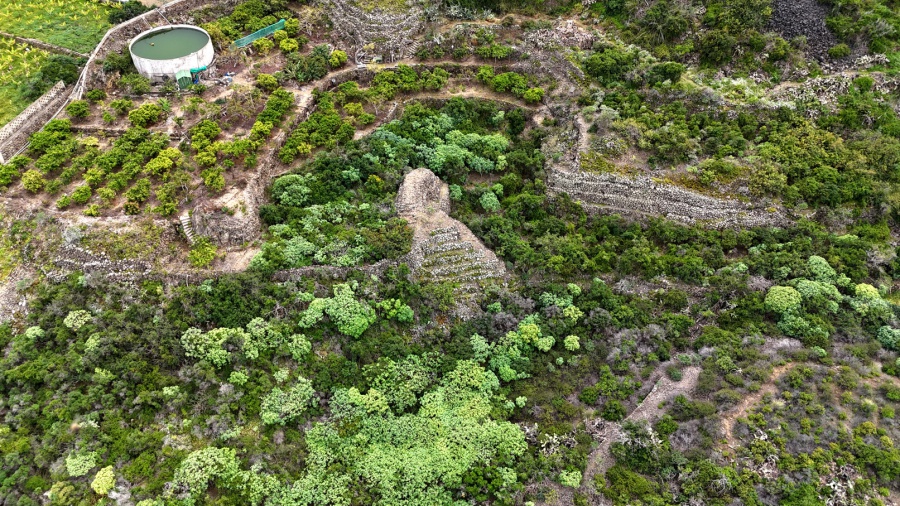
Bild 01
Die Stufenpyramiden auf den Kanaren beherbergen noch viele Rätsel. Neben ihrem Alter tappen die Forscher auch im Dunkeln, welche Funktion sie besaßen. Dieses Luftbild von den Stufenbauten in Santo
Domingo offenbart, dass dieser Komplex möglicherweise in riesiger Makrokalender war, um den Lauf der Gestirne in dem riesen kesselartigen „Amphitheater“ zu bestimmen?
//
The stepped pyramids in the Canary Islands still hold many mysteries. Besides their age, researchers are also in the dark about their function. This aerial photograph of the stepped structures in
Santo Domingo suggests that this complex may have been a giant macro-calendar, used to determine the movement of celestial bodies within the enormous, cauldron-like "amphitheater."
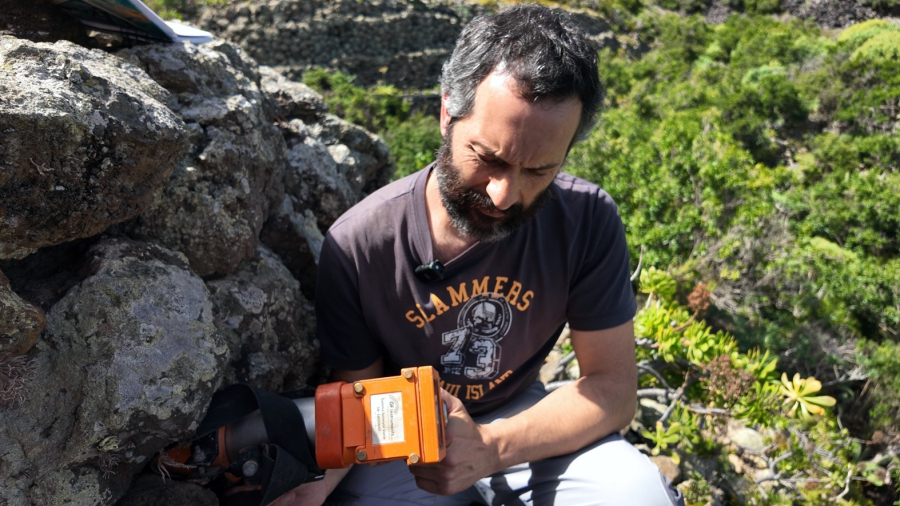
Bild 02
Dr. Jorge Sánchez brachte eigens ein Gamma-Spektrometer von seiner Universität in A Coruña mit. Damit konnten wir die Steine nach bestimmten Isotopien von drei Elementen ausmessen, die letztlich für
die Endberechnung des Alters der OSL-Proben so wichtig sind.
//
Dr. Jorge Sánchez brought a gamma spectrometer with him from his university in A Coruña. This allowed us to measure the stones for specific isotopes of three elements, which are ultimately crucial
for the final calculation of the age of the OSL samples.
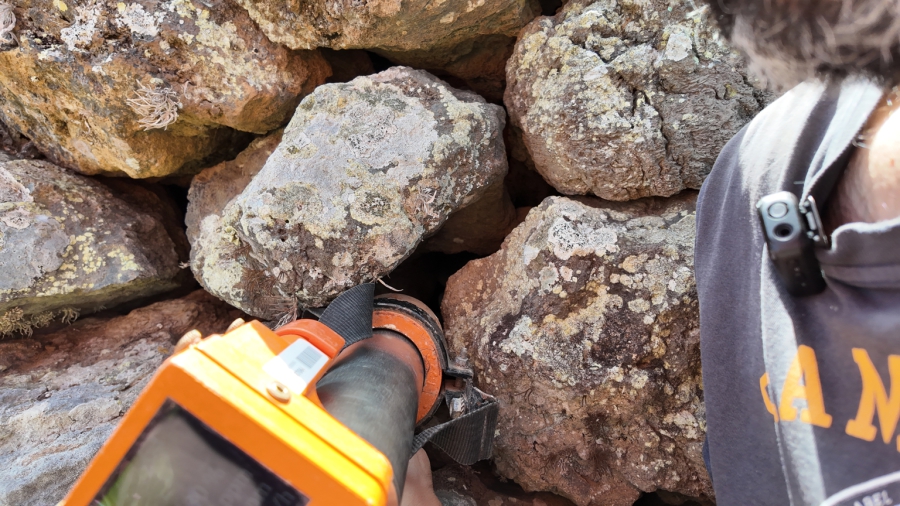
Bild 03
Die Handhabung des Gerätes auf den steilen Pyramidenflanken war gar nicht so einfach. Zum einen mussten wir an die verschiedenen OSL-Probestellen klettern. Und dann dauerte eine Messung jeweils drei
Minuten. Es wurden aber jedes Mal vier Konfigurationen gemessen, was für eine Messung allein zwölf Minuten bedeutet. Also eine Menge Arbeit in mehr als 10 m Höhe!!!
//
Handling the device on the steep pyramid slopes wasn't easy at all. First, we had to climb to the various OSL sampling points, and then each measurement took three minutes. However, four
configurations were measured each time, which meant twelve minutes for a single measurement. So, a lot of work at a height of more than 10 meters!
Bild 04
Bei der OSL-Datierung analysieren wir die Ladung, die in Mineralen entsteht, nachdem sie über Tausende von Jahren ionisierender Strahlung ausgesetzt waren. Gesteine enthalten natürlicherweise geringe
Mengen an Uran, Thorium und anderen Radioisotopen. Diese Radioisotope emittieren Alpha-, Beta- und Gammastrahlung. Gammastrahlung hingegen muss direkt am Probenort gemessen werden, da sie eine
Eindringtiefe von bis zu 30 cm in Gestein oder Sediment besitzt. Darum war die Arbeit vor Ort an den Pyramiden so wichtig!
//
In OSL dating, we analyze the charge that develops in minerals after they have been exposed to ionizing radiation for thousands of years. Rocks naturally contain small amounts of uranium, thorium,
and other radioisotopes. These radioisotopes emit alpha, beta, and gamma radiation. Gamma radiation, however, must be measured directly at the sample site because it can penetrate rock or sediment to
a depth of up to 30 cm. That's why working on-site at the pyramids was so important!
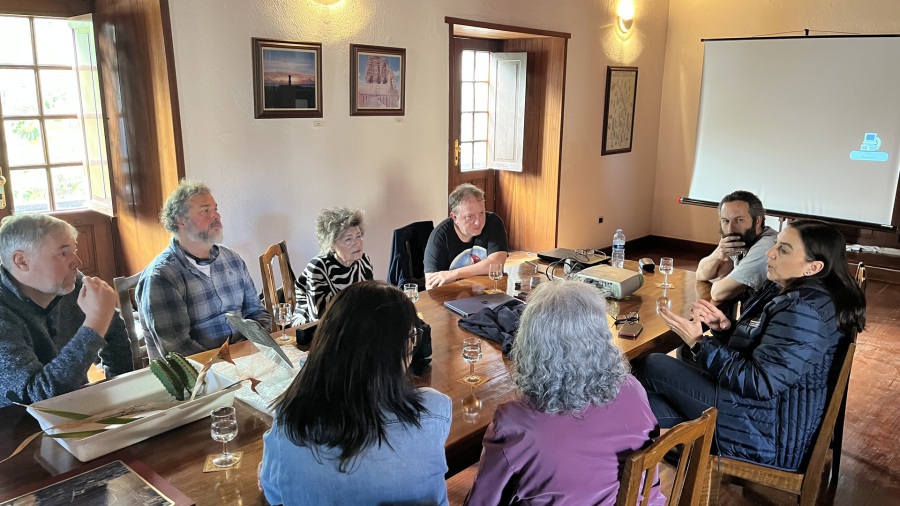
Bild 05
Zum ersten Mal stellten Dr. Sánchez und ich die vorläufigen Messergebnisse einem Gremium auf den Kanaren vor. Neben der Leiterin Alicia B. Martin und den beiden kanarischen Archäologen Prof. Carmen
del Arco und Beatriz G. Girona (alle drei rechts unten) nahmen auch die Witwe von Thor Heyerdahl (Jaqueline neben mir), unser Projektmanager Gustavo Sánchez und ein russischer Archäologe teil (oben
von links nach rechts). Gemeinsam diskutierten wir die Bedeutung dieser neuen Daten für die Forschung auf den Kanarischen Inseln.
//
For the first time, Dr. Sánchez and I presented the preliminary measurement results to a panel on the Canary Islands. In addition to the project director, Alicia B. Martin, and the two Canarian
archaeologists, Professor Carmen del Arco and Beatriz G. Girona (all three at the bottom right), Thor Heyerdahl's widow (Jaqueline, next to me), our project manager, Gustavo Sánchez, and a Russian
archaeologist also participated (top, from left to right). Together, we discussed the significance of this new data for research in the Canary Islands.
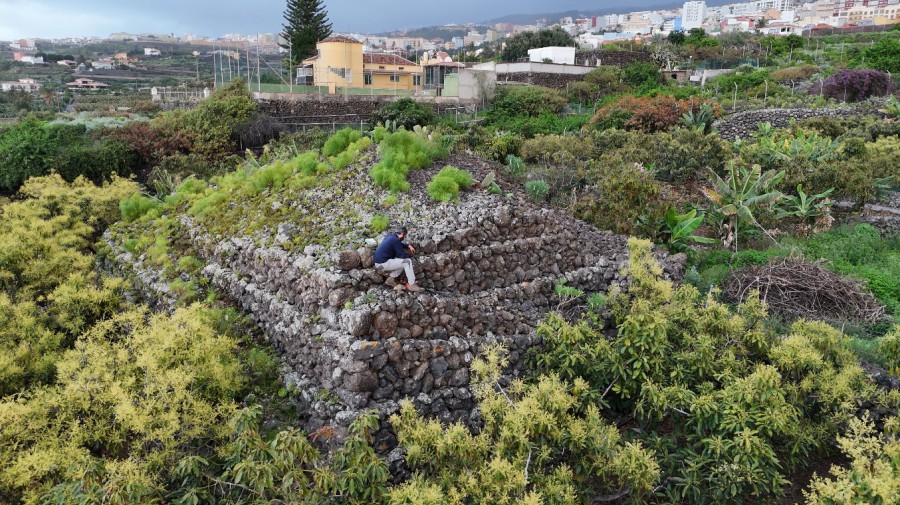
Bild 06
Nochmals der Einsatz des Spektrometers von Jorge auf der Santis-Pyramide. Dort wo er misst, ist der älteste Teil dieser Stufenpyramide. Von Jorge aus geht eine Rampe nach rechts unten. Diese wurde
später vor den älteren Pyramidenstumpf davorgesetzt. Das kann man in den Ergebnissen der OSL deutlich ablesen! Das Gebiet auf dem die Pyramide steht wurde vor 60 Jahren künstlich mit Boden
aufgeschüttet. Auch diesen „Event“ kann man in den OSL-Daten ablesen und bestätigen!
//
Jorge's spectrometer was used again on the Santis Pyramid. The measurement taken at the site of the oldest part of this step pyramid is visible. From Jorge's measurement, a ramp leads downwards and
to the right. This ramp was later added in front of the older truncated pyramid. This is clearly visible in the OSL results! The area on which the pyramid stands was artificially filled with fertile
soil 60 years ago. This event, too, can be seen and confirmed in the OSL data!
Pantelleria – Stufenarchitektur im Herzen des Mittelmeeres
Bereits 1999 führte mich eine Forschungsreise auf die faszinierende Vulkaninsel Pantelleria, zwischen Sizilien und Tunesien gelegen – ein kultureller Schnittpunkt im Herzen des Mittelmeeres. Schon damals beeindruckten mich die sogenannten „Sesi“, stufenförmige Rundbauten aus schwarzem Lavagestein, die auf der Insel verstreut liegen.
Diese monumentalen Steinstrukturen aus der Bronzezeit wirken auf den ersten Blick archaisch und zugleich überraschend konstruktiv durchdacht. Unter ihren steinernen Aufschichtungen befinden sich Grabkammern – weshalb sie häufig als Grabhügel interpretiert werden. Doch ihre terrassierte, stufenartige Bauweise erinnert in ihrer Formensprache an frühe monumentale Architekturtraditionen des Mittelmeerraumes. Archäologien datieren diese Stufenbauten ins 18. Jahrhundert v. Chr.
Pantelleria war nie isoliert. Die Insel lag an wichtigen Seewegen zwischen Nordafrika, Sizilien und dem östlichen Mittelmeer. Obsidian aus Pantelleria wurde bereits in prähistorischer Zeit gehandelt – ein Beleg für frühe maritime Vernetzung. Die Sesi stehen somit nicht nur für eine lokale Bautradition, sondern auch für die kulturelle Dynamik einer Insel, die seit Jahrtausenden im Austausch mit verschiedenen Zivilisationen stand. Ob sie von den viel älteren Stufenbauten auf Sizilien inspiriert wurden, ist eine vage Spekulation.
Pantelleria bleibt für mich ein Schlüsselort – ein steinernes Archiv inmitten des Meeres.
++++++++++++++++++++++++++++++++++++++++++++++++++
Pantelleria – Stepped Architecture in the Heart of the Mediterranean
As early as 1999, a research journey brought me to the fascinating volcanic island of Pantelleria, located between Sicily and Tunisia — a cultural crossroads in the very heart of the
Mediterranean. What struck me most were the so-called “Sesi”: stepped circular stone structures built from dark volcanic rock, scattered across the island.
At first glance, these Bronze Age monuments appear both archaic and architecturally sophisticated. Beneath their layered stone constructions lie burial chambers, which is why they are often
interpreted as funerary monuments. Yet their terraced, stepped design evokes broader architectural traditions of early monumental building in the Mediterranean world.
Pantelleria was never isolated. The island occupied a strategic position along important maritime routes linking North Africa, Sicily, and the eastern Mediterranean. Its obsidian was traded widely in prehistoric times — clear evidence of early seafaring networks and long-distance exchange.
The Sesi therefore represent not only a local architectural expression, but also the cultural dynamism of an island that stood at the intersection of civilizations for millennia.
For me, Pantelleria remains a key site — a stone archive rising from the sea.
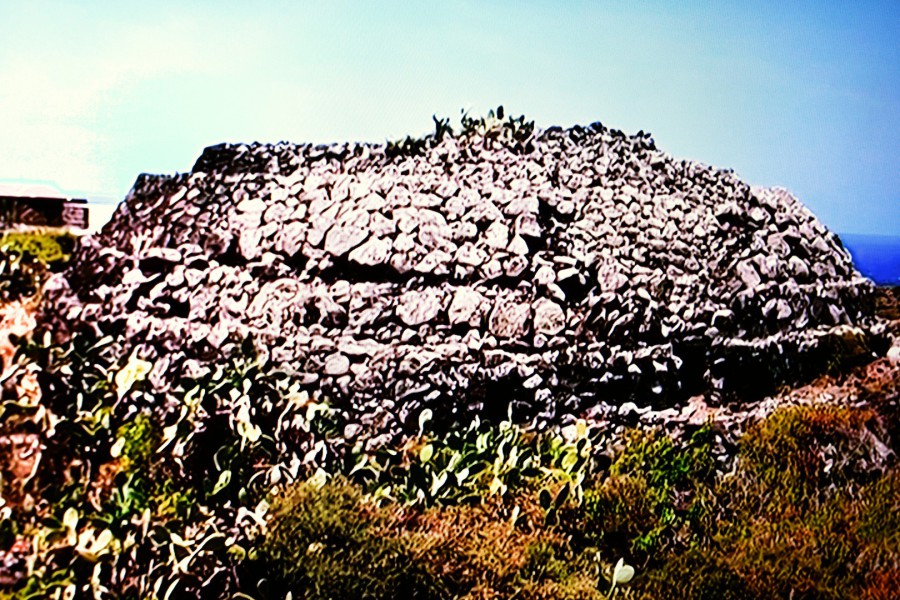
Bild 01
Typische monumentale Steinstrukturen aus der Bronzezeit auf Pantelleria. Sie wirken auf den ersten Blick etwas megalithisch und zugleich überraschend konstruktiv durchdacht. Aufgrund der zahlreichen
Grabkammern werden sie häufig als Grabhügel interpretiert.
//
Typical monumental stone structures from the Bronze Age on Pantelleria. At first glance, they appear somewhat megalithic, yet surprisingly well-constructed. Due to the numerous burial chambers, they
are often interpreted as burial mounds.
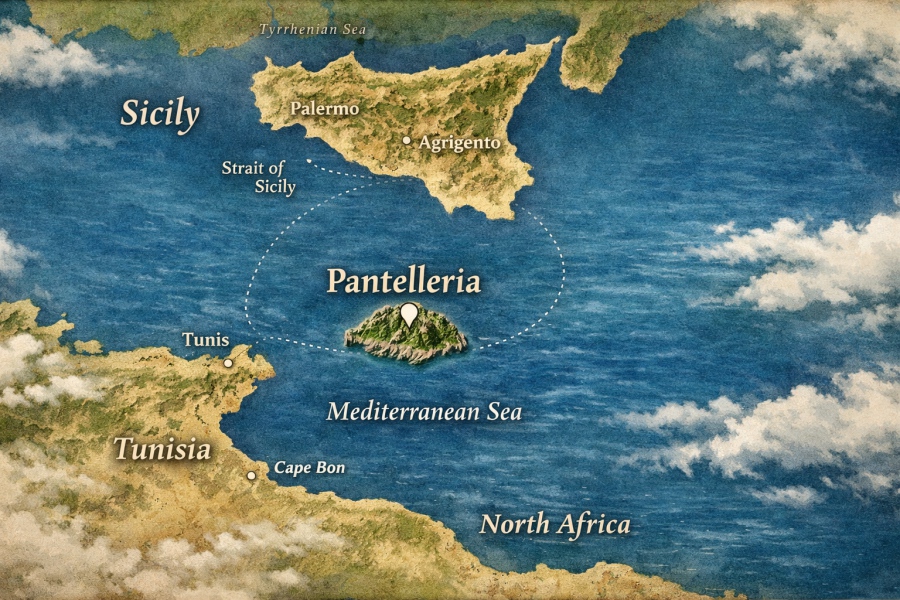
Bild 02
Pantelleria befindet sich auf halbem Wegen zwischen Sizilien und Tunesien. Die kleine Insel besitzt etwa 83 km². Sie ist vulkanischen Ursprungs mit dem höchsten Punkt dem Montagna Grande (836
m).
//
Pantelleria is located halfway between Sicily and Tunisia. The small island covers approximately 83 km². It is of volcanic origin, with its highest point being Montagna Grande (836 m).
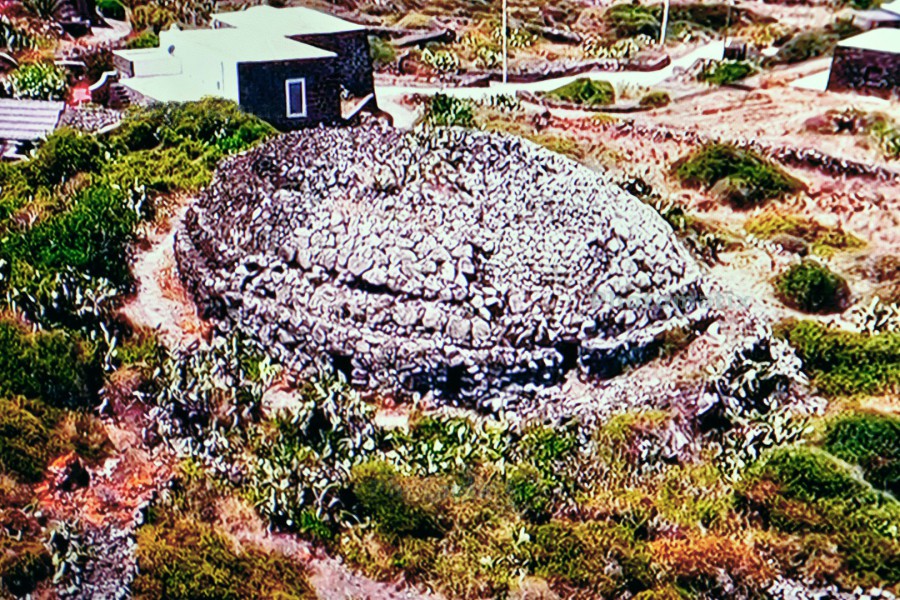
Bild 03
Aufgrund ihrer terrassierten Bauweise werden sie oft mit den Stufenpyramiden des Mittelmeers verwechselt. Doch sie haben damit keinerlei Verwandtschaft. Sie sind mehr als 1.000 Jahre jünger als die
Zikkurate auf Sizilien und Sardinien, was auch ihre Urheberschaft in die Mittlere Bronzezeit verlegt.
//
Because of their terraced construction, they are often confused with the step pyramids of the Mediterranean. However, they are not related to them at all. They are more than 1,000 years younger than
the ziggurats in Sicily and Sardinia, which also places their origin in the Middle Bronze Age.
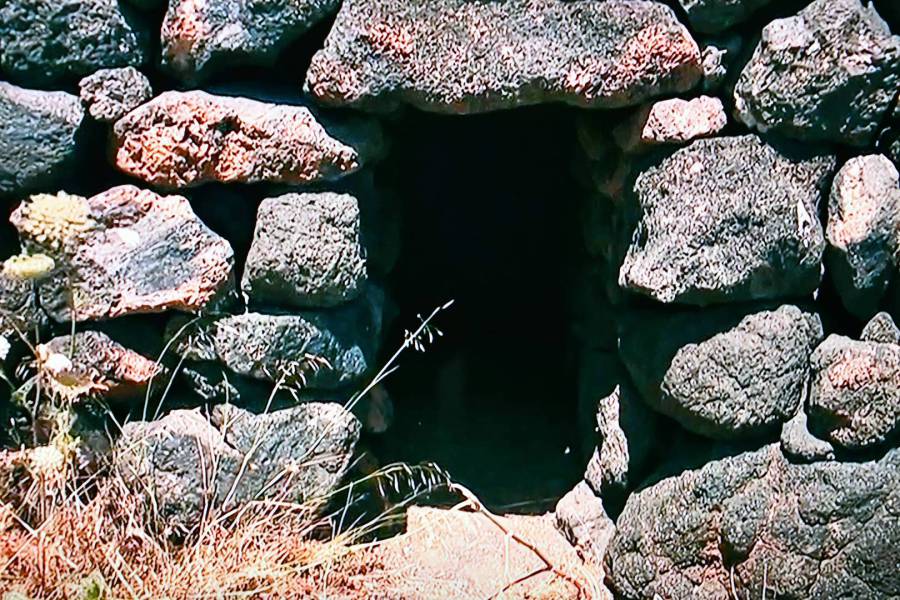
Bild 04
Eingang in eine der so genannten Grabkammern. Die Steinsetzungen sind in Trockensteinbauweise errichtet. 1999 hatte ich die größten Kammern persönlich besichtigt.
//
Entrance to one of the so-called burial chambers. The stone arrangements are constructed using dry stone masonry. I personally visited the largest chambers in 1999.
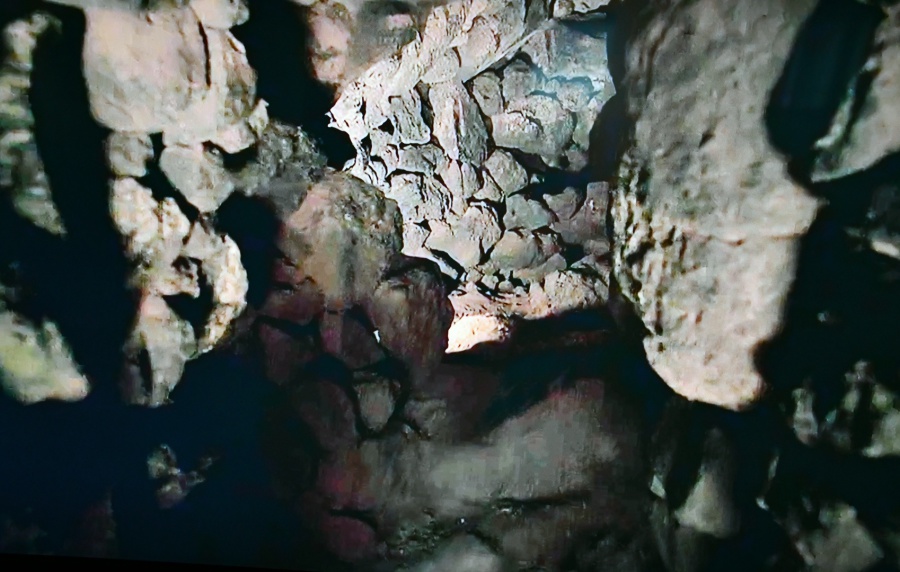
Bild 05
Blick in das Innere der steinernen Grabkammern. Damals gab es an dem Bauwerk keine weiterführenden Informationen über Funde oder etwaige Ausgrabungen. Manche der Gänge gehen bis mehr als 6 m tief in
das Bauwerk. Andere sind ehe kurz. An klassischen Stufenpyramiden sind solche „Kammern“ bis auf ganz wenige Ausnahmen (vielleicht nachträglich eingebaut?) nicht vorhanden.
//
A view inside the stone burial chambers. At the time, there was no further information about finds or any excavations at the structure. Some of the passages extend more than 6 meters deep into the
building. Others are quite short. With very few exceptions (perhaps added later?), such "chambers" are not found in classic stepped pyramids.
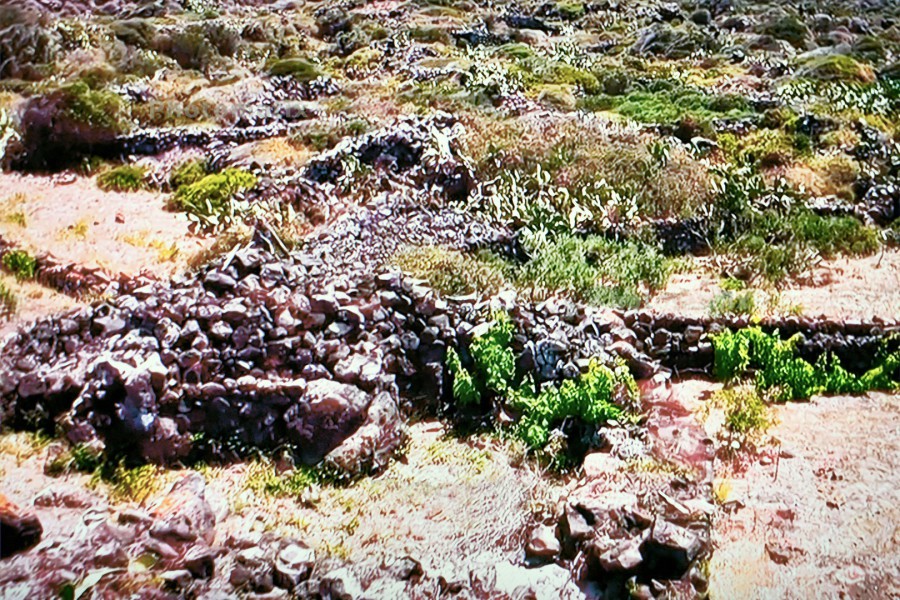
Bild 06
Der so genannte „Friedhof von Pantelleria“. Hier vermuten die Archäologen die Grabstätten jener Baumeister der Sesi. Auch hier werden in Form und Architektur Bezüge zu Nachbarinseln offenbar. Diese
Anlage lässt darauf schließen, dass die Kammern der Rundbauten vermutlich andere Funktionen besaßen. Welche sind jedoch unbekannt.
//
The so-called "Pantelleria Cemetery." Archaeologists believe this to be the burial site of the Sesi's master builders. Here, too, the form and architecture reveal connections to neighboring islands.
This site suggests that the chambers of the circular buildings likely served other purposes, but what those purposes were remains unknown.
Marokko – Wissenschaft, Geschichte und neue Horizonte
Meine Reise nach Marokko war in jeder Hinsicht außergewöhnlich. Der Auftakt an der Mohammed V Universität in Rabat mit einem gemeinsamen Symposium und intensiven Fachgesprächen markierte einen wichtigen Meilenstein für unser transdisziplinäres Forschungsprojekt. Die offene, konstruktive Atmosphäre und die große Bereitschaft zur Zusammenarbeit haben mich tief beeindruckt.
Besonders bereichernd waren die weiterführenden Gespräche mit Archäologen, Pharmakologen und Botanikern, die neue Perspektiven eröffneten – unter anderem zu möglichen präkolumbischen Tabakspuren in der Rif-Region. Solche interdisziplinären Ansätze zeigen, wie viel Potenzial in einer vernetzten Forschung liegt.
Auch die Besichtigungen historischer Stätten wie Lixus und die Eindrücke im Museum von Rabat haben deutlich gemacht, welch zentrale Rolle Marokko einst im maritimen Fernhandel gespielt haben könnte. Hinweise auf weitreichende Handelskontakte – transmediterran und möglicherweise sogar transatlantisch – verdichten sich zunehmend.
Marokko erscheint mehr denn je als kultureller Korridor zwischen Welten – ein Raum, der in zukünftigen Forschungen noch stärker in den Fokus rücken sollte. Ich blicke dankbar auf intensive Tage
voller Inspiration zurück – und freue mich bereits auf die Fortsetzung dieser spannenden Zusammenarbeit.
+++++++++++++++++++++++++++++
Morocco – Science, History, and New Horizons
My trip to Morocco was extraordinary in every respect. The kickoff at Mohammed V University in Rabat, with a joint symposium and intensive discussions, marked an important milestone for our transdisciplinary research project. The open, constructive atmosphere and the great willingness to collaborate deeply impressed me.
The follow-up discussions with archaeologists, pharmacologists, and botanists were particularly enriching, opening up new perspectives – including on possible pre-Columbian tobacco traces in the Rif region. Such interdisciplinary approaches demonstrate the immense potential of networked research.
The visits to historical sites like Lixus and the impressions gained in the Rabat Museum also made clear the central role Morocco may once have played in long-distance maritime trade. Evidence of far-reaching trade contacts – trans-Mediterranean and possibly even transatlantic – is becoming increasingly compelling.
More than ever, Morocco appears as a cultural corridor between worlds – a space that should be given even greater focus in future research. I look back with gratitude on intense days full of inspiration – and I am already looking forward to continuing this exciting collaboration.
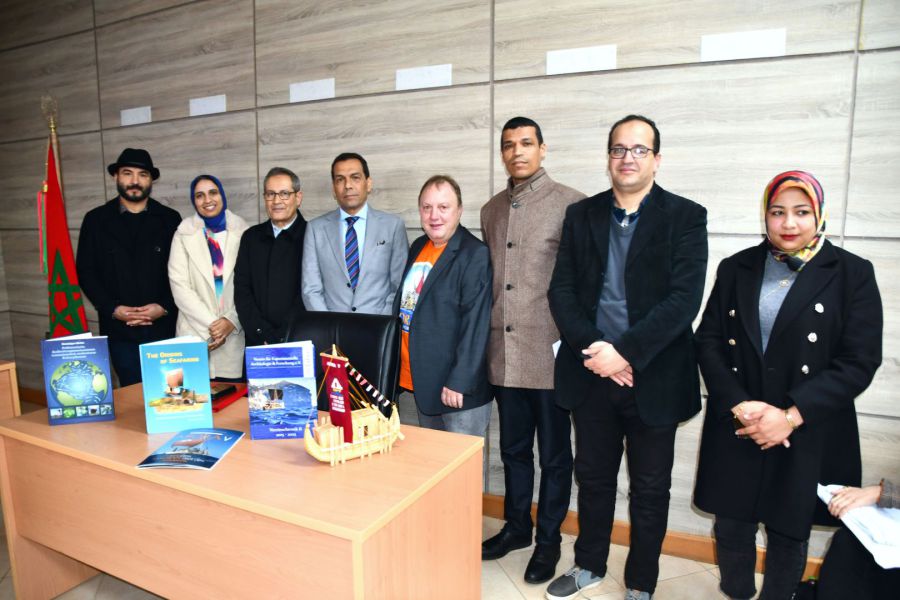
Bild 01
Alle an der Konferenz beteiligten Wissenschaftler an der Faculté des Lettres et des Sciences Humaines an der Mohammed V University in Rabat. Dort begründete Dominique eine neue Forschungskooperation
mit mehreren marokkanischen Wissenschaftlern.
//
All the scientists involved in the conference were at the Faculty of Letters and Human Sciences at Mohammed V University in Rabat. There, Dominique established a new research collaboration with
several Moroccan scientists.
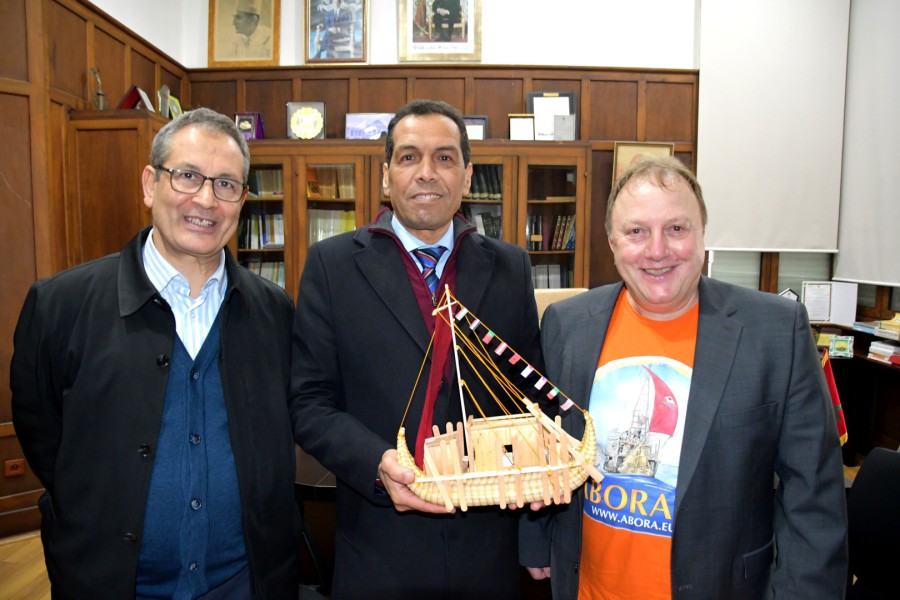
Bild 02
Der Dekan Prof. Zakaria Boudhim (rechts) überreichte mit Prof. Said Bennis (links) an Dominique die Ehrenurkunde für die erfolgreiche Konferenz an der Universität. Said entwickelte aus der ABORA-
Präsentation über die mögliche Existenz von prä-kolumbischen Tabak in Marokko den neuen Begriff „Marokkologie“. Ziel dieses Feldes ist die Strukturierung eines der Ägyptologie ähnlichen
Forschungsbereichs, der sich aber auf das marokkanische Genie und die territorialen Besonderheiten konzentriert (Sprachen, Anthropologie, Identität, Mensch, Geschichte, Zivilisation ... ).
//
Dean Professor Zakaria Boudhim (right), together with Professor Said Bennis (left), presented Dominique with the certificate of honor for the successful conference at the university. Prof. Said
developed the new term "Moroccanology" from the ABORA presentation on the possible existence of pre-Columbian tobacco in Morocco. The aim of this field is to structure a research area similar to
Egyptology, but one that focuses on Moroccan genius and territorial specificities (languages, anthropology, identity, humanity, history, civilization, etc.).
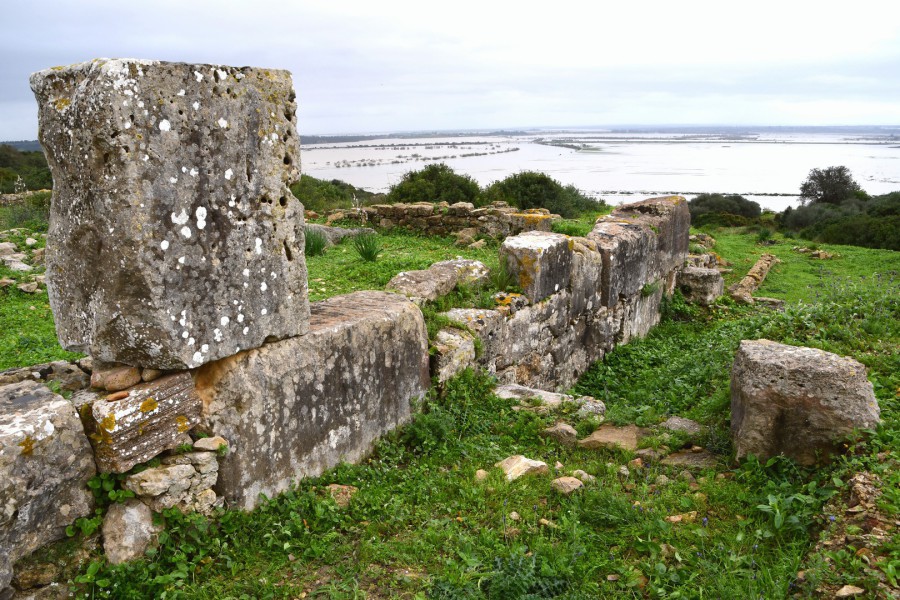
Bild 03
Ein weiterer Höhepunkt war die Besichtigung von Lixus nahe der heutigen Stadt Larache. Obwohl eine Überprüfung der megalithischen Mauern nahe des Hafens wegen der Überschwemmungen unmöglich war, sind
die ältesten Hinterlassenschaften der Phönizier beeindruckend. Diese Mauern stammen aus dem späten 2. Jts. v. Chr.
//
Another highlight was the visit to Lixus, near the modern city of Larache. Although an inspection of the megalithic walls near the harbor was impossible due to flooding, the oldest Phoenician remains
are impressive. These walls date back to the late 2nd millennium BC.
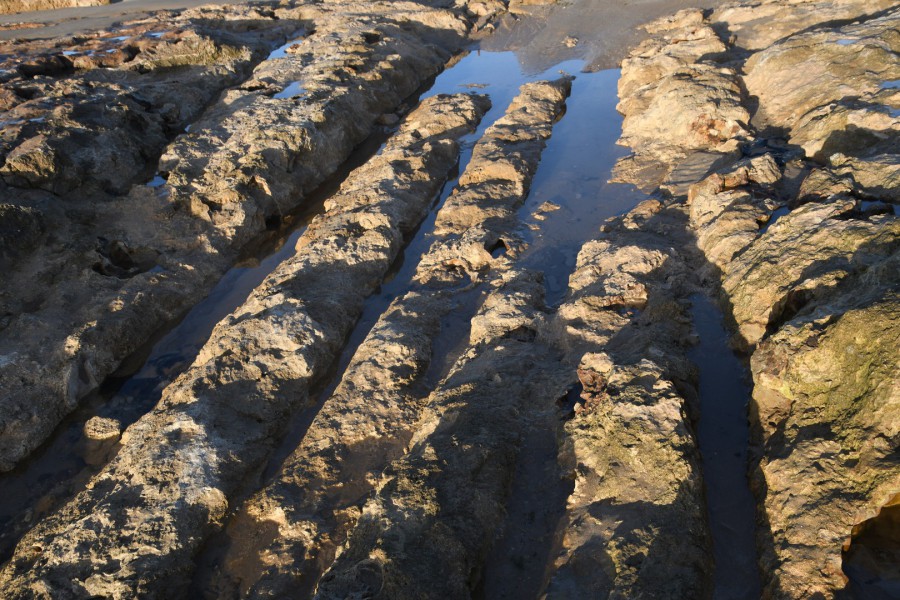
Bild 04
Das Highlight war die Entdeckung eines bisher unbekannten Curt Rut-Feldes nördlich von Essaouira. Diese Struktur hat extreme Ähnlichkeiten mit ähnlichen Wagenspur-Feldern im gesamten Mittelmeerraum
als auch auf den Kanaren und Azoren. Alles nur Zufall oder haben diese Völker doch viel früher als bekannt über den Atlantischen Ozean miteinander kommuniziert?
//
The highlight was the discovery of a previously unknown Curt Rut field north of Essaouira. This structure bears striking similarities to similar wagon-track fields found throughout the Mediterranean
region, as well as in the Canary Islands and the Azores. Is this all just coincidence, or did these peoples communicate across the Atlantic Ocean much earlier than previously thought?
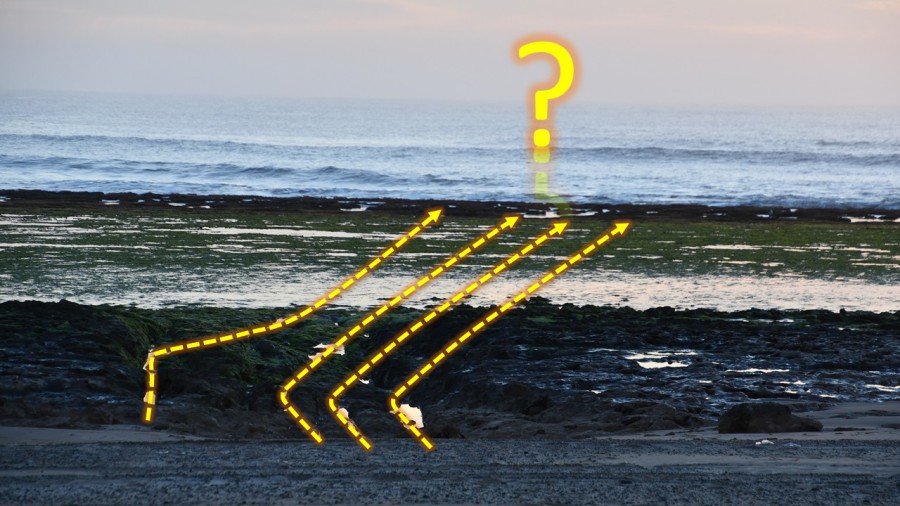
Bild 05
Es bleibt Aufgabe künftiger Forschungsreisen herauszufinden, wohin diese Wagenspuren führen. Gleiches gilt für die Megalithstrukturen in Larache und Safi. Vieles wird die Feldforschung in den
kommenden Monaten noch ans Tageslicht bringen. Die nächste Forschungsreise nach Marokko ist schon in Planung!
//
It remains the task of future research expeditions to determine where these wagon tracks lead. The same applies to the megalithic structures in Larache and Safi. Much more will be revealed by
fieldwork in the coming months. The next research expedition to Morocco is already being planned!
Lixus – Eine Reise durch 3000 Jahre Geschichte
Die Besichtigung der archäologischen Stätte von Lixus gehört zu jenen Momenten, in denen Landschaft und Geschichte unmittelbar ineinandergreifen. Heute liegt der Ort auf einer Anhöhe über dem Loukos-Tal nahe Larache – doch in der Antike befand sich Lixus auf einer Halbinsel. Vor rund 3000 Jahren lag der Meeresspiegel deutlich höher. Erst mit dem allmählichen Absinken des Meeresspiegels verlor die Stadt ihre maritime Insellage und wurde Teil des Festlands.
Bis heute sind nur etwa zehn Prozent der Anlage archäologisch freigelegt. Was bereits sichtbar ist, lässt jedoch die außergewöhnliche Bedeutung dieses Ortes erkennen. Die ältesten bislang bekannten Siedlungsschichten gehen auf phönizische Niederlassungen zurück, die noch im späten 2. Jahrtausend v. Chr., entstanden. Ihre massiven, beinahe megalithisch wirkenden Mauern unterscheiden sich deutlich von späteren Bauphasen. Die phönizische Architektur wirkt kompakt und funktional – ein klarer Kontrast zu den nachfolgenden hellenistischen und römischen Strukturen.
Mit der römischen Epoche erreichte Lixus seine größte Ausdehnung. Besonders eindrucksvoll ist die exponierte Lage eines monumentalen Palastkomplexes, der mit den numidisch-mauretanischen Königen Juba I. und Juba II. in Verbindung gebracht wird. Von hier aus überblickte man einst den Hafen und pflegte Kontakt mit dem westlichen Mittelmeer. Als letzte Kulturphase hinterließen muslimische Gemeinschaften ihre Spuren. Doch mit den veränderten Küstenlinien und dem weiteren Rückgang des Meeresspiegels verlagerte sich das wirtschaftliche Zentrum allmählich an den heutigen Standort von Larache.
Die heutige Ruinenlandschaft ist deshalb mehr als ein archäologischer Ort – sie ist ein geologisches und kulturhistorisches Archiv. Kaum ein anderer Platz in Marokko zeigt so anschaulich, wie eng
der Verlauf der Geschichte mit Veränderungen von Klima, Küstenlinien und Handelswegen verbunden ist. Da der überwiegende Teil der Stadt noch im Boden ruht, bleibt Lixus zugleich ein Versprechen an
die zukünftige Forschung.
++++++++++++++++++++++++++++++++++++++++++++++++++
Lixus – A Journey Through 3,000 Years of History
A visit to the archaeological site of Lixus is one of those moments where landscape and history intertwine. Today, the site sits on a hill overlooking the Loukos Valley near Larache – but in antiquity, Lixus was located on a peninsula. Around 3,000 years ago, the sea level was significantly higher. Only with the gradual drop in sea level did the city lose its island location and become part of the mainland.
To date, only about ten percent of the site has been archaeologically excavated. However, what is already visible reveals the extraordinary significance of this place. The oldest known settlement layers date back to Phoenician settlements, which emerged as late as the 2nd millennium BC. Their massive, almost megalithic-looking walls differ markedly from later construction phases. Phoenician architecture appears compact and functional – a clear contrast to the subsequent Hellenistic and Roman structures.
Lixus reached its greatest extent during the Roman era. Particularly impressive is the prominent location of a monumental palace complex associated with the Numidian-Mauretan kings Juba I and Juba II. From here, one once overlooked the harbor and the trade routes of the western Mediterranean. Muslim communities left their mark as the last cultural phase. However, with changing coastlines and the further decline of sea levels, the economic centre gradually shifted to the present-day location of Larache.
The present-day ruins are therefore more than just an archaeological site – they are a geological and cultural-historical archive. Hardly any other place in Morocco illustrates so vividly how closely the course of history is intertwined with changes in climate, coastlines, and trade routes. Since the majority of the city still lies buried, Lixus also remains a promise for future research.
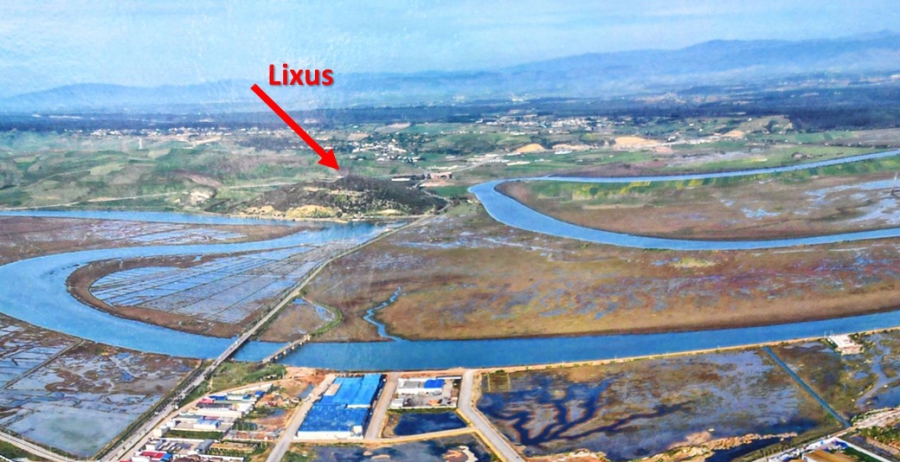
Bild 01
Heute umschließt der Loukos-Fluss den Berg Lixus wie ein Omega. Doch in antiker Zeit war die ganze Bucht Teil des atlantischen Ozeans. Am Fuße der Halbinsel lag auch ein kleiner Hafen, den die
Archäologen erst jüngst entdeckten.
//
Today, the Loukos River encircles Mount Lixus like an omega. But in ancient times, the entire bay was part of the Atlantic Ocean. At its foot of this peninsula lay a small harbor, which
archaeologists only recently discovered.
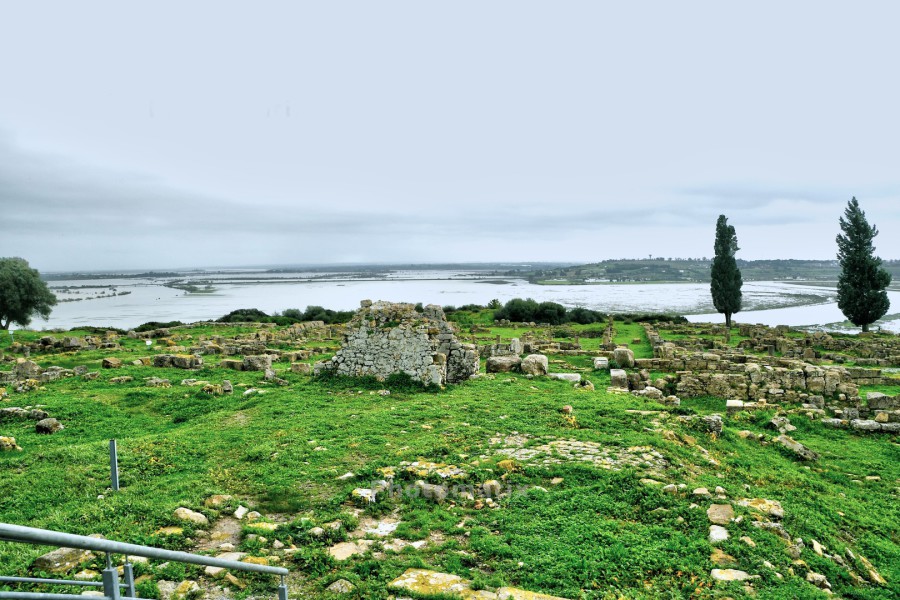
Bild 02
Blick auf den Palast der numidisch-mauretanischen Könige. Zu Jahresbeginn regnete es sintflutartig und löste über Nordmarokko starke Überschwemmungen aus. Das Tal wirkt seitdem wie in der Antike als
Teil des großen Ozeans.
//
View of the palace of the Numidian-Mauritian kings. At the beginning of the year, torrential rains caused severe flooding in northern Morocco. Since then, the valley has resembled the ancient
landscape of the ocean.
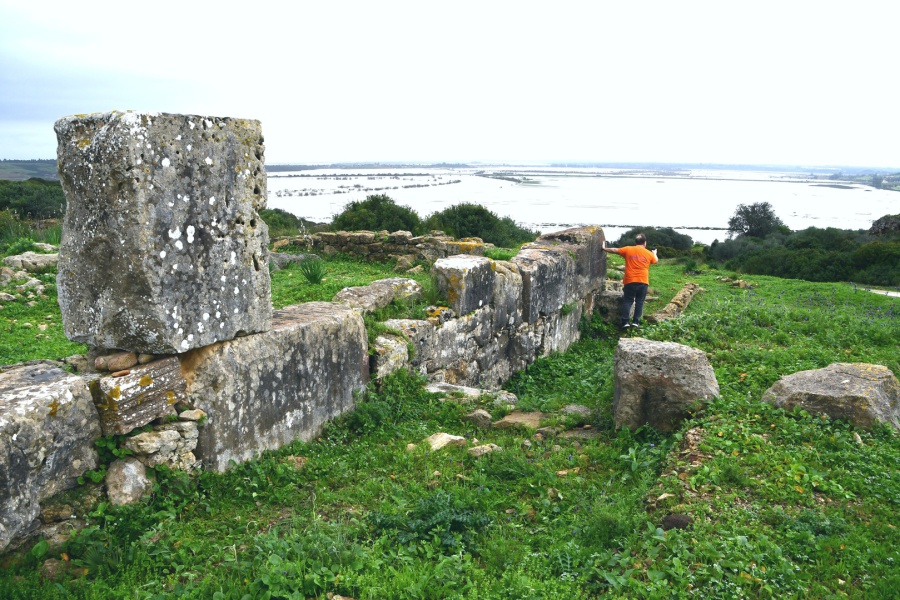
Bild 03
Von der frühesten Besiedlung sind zurzeit nur wenige Strukturen freigelegt. Diese Mauer zeigt die eigentümliche Bauweise der Phönizier. Im Untergrund soll sich auch noch eine Zisterne phönizischen
Ursprungs befinden.
//
Only a few structures from the earliest settlement have been uncovered so far. This wall demonstrates the distinctive construction methods of the Phoenicians. A cistern of Phoenician origin is also
believed to be located underground.
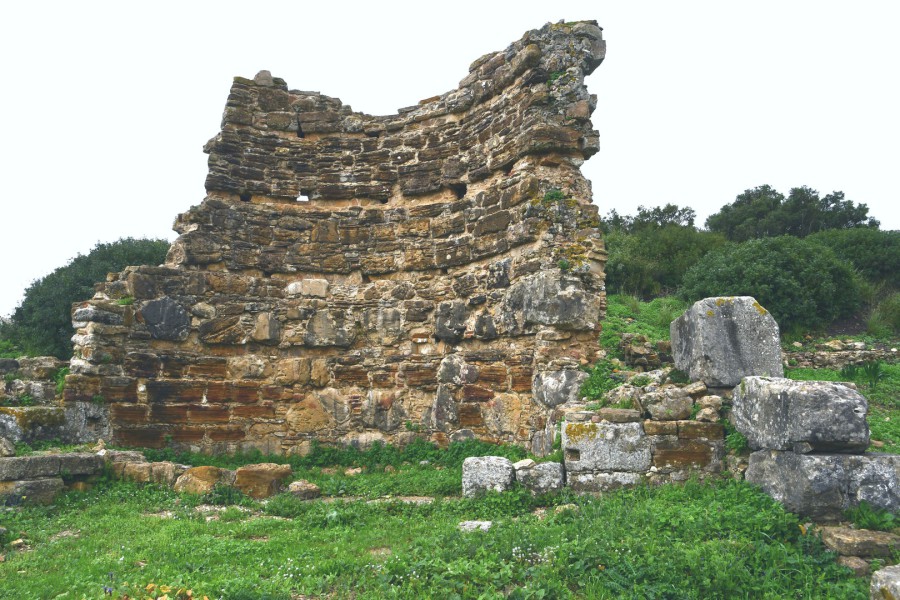
Bild 04
Am Ende der Mauer fügten die Römer eine Basilika an. Am rechten Rand sieht man den Übergang in das viel ältere phönizische Bauwerk. Deutlich kann man den Unterschied in den beiden Bauweisen erkennen.
Die phönizische kam ohne Mörtel, nur durch feingesetzt große Blöcke aus.
//
At the end of the wall, the Romans added a basilica. On the right edge, you can see the transition to the much older Phoenician structure. The difference between the two construction methods is
clearly visible. The Phoenician wall used no mortar, relying solely on precisely placed large blocks.
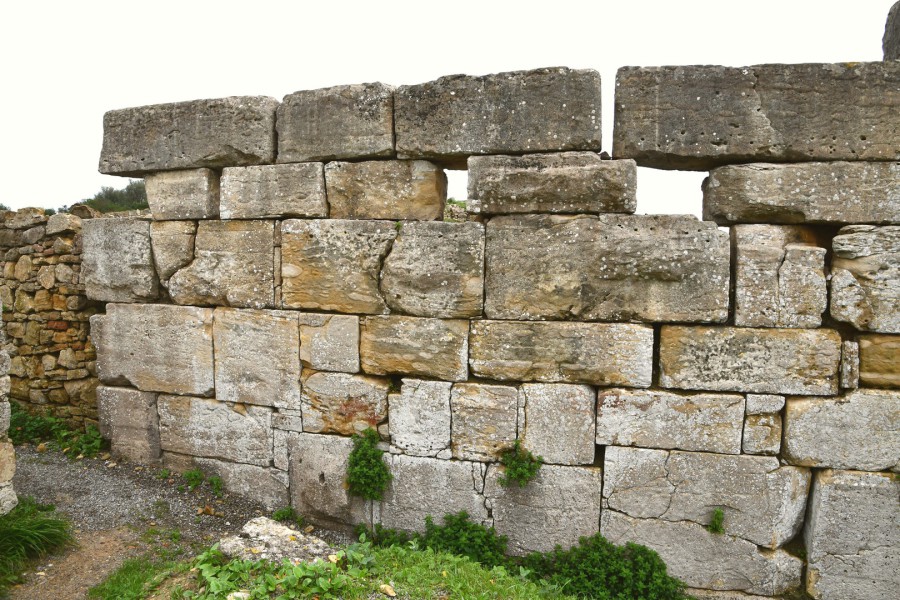
Bild 05
Vor den Römern trauten sich auch die Griechen auf den Atlantik hinaus. Auch sie fanden den Weg an den Loukos-Fluss, wo sie oben auf der Bergkuppe eine mächtige Burg errichteten. Sie wurde schließlich
von Römern übernommen und in ihre Anlage integriert.
//
Before the Romans, the Greeks also ventured out onto the Atlantic. They too found their way to the Loukos River, where they built a mighty fortress atop the hill. It was eventually taken over by the
Romans and integrated into their complex.
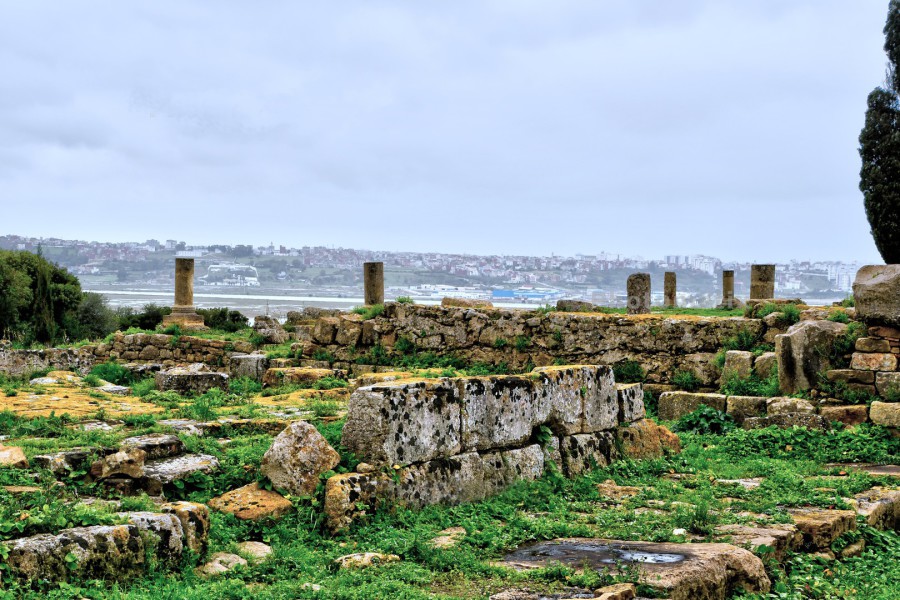
Bild 06
Die Reste des Königspalastes der Könige Juba I. & II. Auch sie hatten Lixus fest im Griff bis sich die Umweltbedingungen abrupt änderten. Juba II. unternahm auch eine weitreichende
Entdeckungsreise, um die Ländereien weit im Süden Afrikas zu erkunden.
//
The remains of the royal palace of Kings Juba I & II. They too held Lixus firmly in their grip until environmental conditions changed abruptly. Juba II also undertook an extensive voyage of
discovery to explore the lands far to the south of Africa.
Transdisziplinäre Forschung trifft Rabat -
Ein erfolgreicher Auftakt an der Mohamed V Universität
Gestern hatte ich die Gelegenheit, unsere ABORA-Forschungen an der Mohamed V Universität in Rabat vorzustellen. Die Präsentation stieß auf sehr großes akademisches Interesse – insbesondere unsere transdisziplinären Resultate aus Archäologie, Astronomie, Felsbildkunde und experimenteller Seefahrt wurden intensiv diskutiert. Neben den inhaltlichen Ergebnissen fand auch die audiovisuelle Methodik des Vortrags große Aufmerksamkeit.
Besonders spannend war die inhaltliche Schnittmenge mit dem aktuellen nationalen Programm von König Mohammed VI., das Marokko stärker für Ozeanforschung, Seehandel und maritime Traditionen öffnen soll. Die universitäre Leitung erkannte darin eine bemerkenswerte Übereinstimmung mit unseren Forschungszielen.
Im anschließenden persönlichen Austausch wurde uns die volle Kooperationsbereitschaft der Universität zugesichert. Höhepunkt war die offizielle Einladung zu einem mehrtägigen wissenschaftlichen
Workshop, der die weitere Zusammenarbeit vertiefen soll.
++++++++++++++++++++++++++++++++++++++++++++++++++
Transdisciplinary Research Meets Rabat –
A Successful Opening at Mohammed V University
Yesterday I had the opportunity to present our ABORA research at Mohammed V University in Rabat. The presentation generated very strong academic interest — in particular, our transdisciplinary results from archaeology, astronomy, rock art studies, and experimental seafaring were discussed intensively. In addition to the research content, the audiovisual methodology of the lecture also attracted considerable attention.
Especially exciting was the thematic overlap with the current national program of King Mohammed VI, which aims to strengthen Morocco’s engagement with ocean research, maritime trade, and seafaring traditions. The university leadership recognized a remarkable alignment between this initiative and our research objectives.
During the subsequent personal exchange, the university expressed full willingness for cooperation. The highlight was an official invitation to a multi-day scientific workshop intended to deepen our future collaboration.
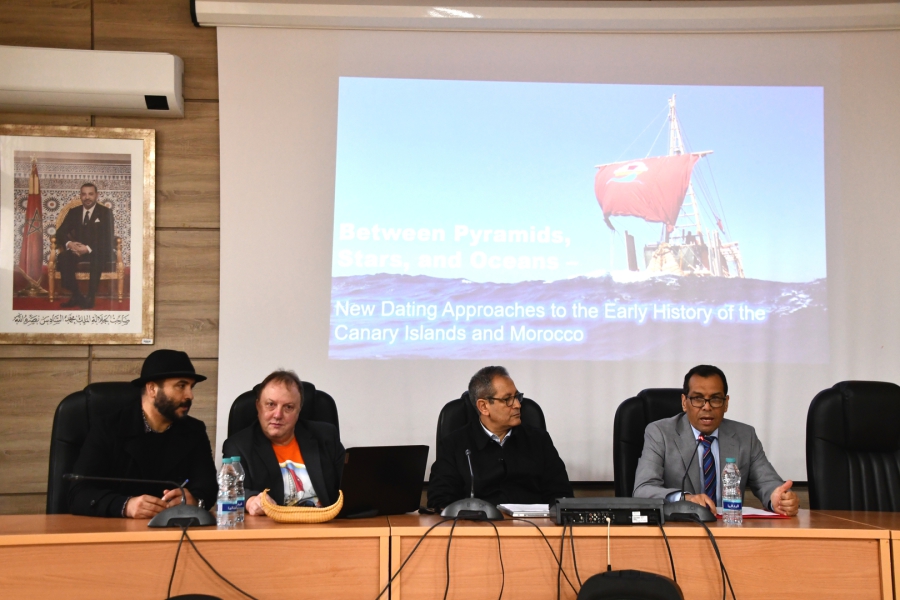
Bild 01
Dominique hielt der Festvortrag am Ende der Konferenz zum Thema: „New Dating Approaches to Early History oft he Canary Islands and Morocco“. Vorher sprachen der Dekan und viele Wissenschaftler aus
Archäologie, Geographie und Social Sciences.
//
Dominique gave the keynote address at the end of the conference on the topic: “New Dating Approaches to Early History of the Canary Islands and Morocco.” Prior to this, the dean and numerous scholars
from archaeology, geography, and social sciences spoke.
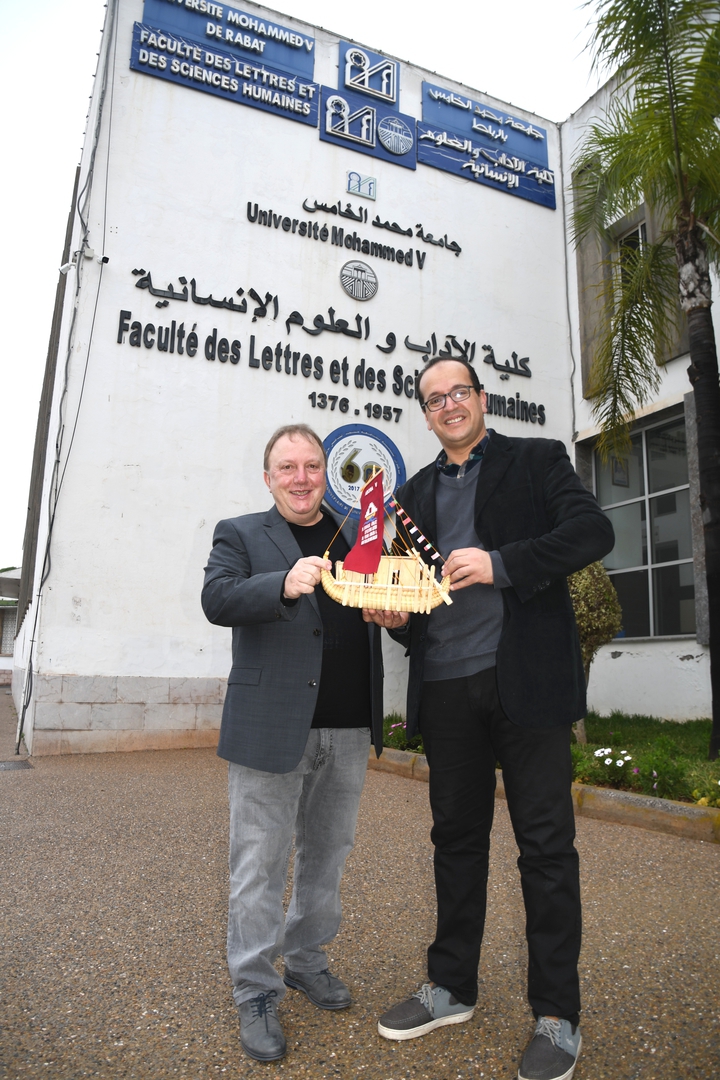
Bild 02
Prof. Mohamed Oubihi lud Dominique ein, und organisierte diese Konferenz. Seine akademischen Verbindungen werden helfen, wichtige Kontakte zu Wissenschaftlern in Marokko herzustellen. Sie sollen
helfen, um offene Fragen über die Existenz von vorkolumbischem Tabak und Stufenpyramiden in Marokko zu klären.
//
Professor Mohamed Oubihi invited Dominique and organized this conference. His academic connections will help establish important contacts with scientists in Morocco. These contacts should help
clarify open questions about the existence of pre-Columbian tobacco and step pyramids in Morocco.
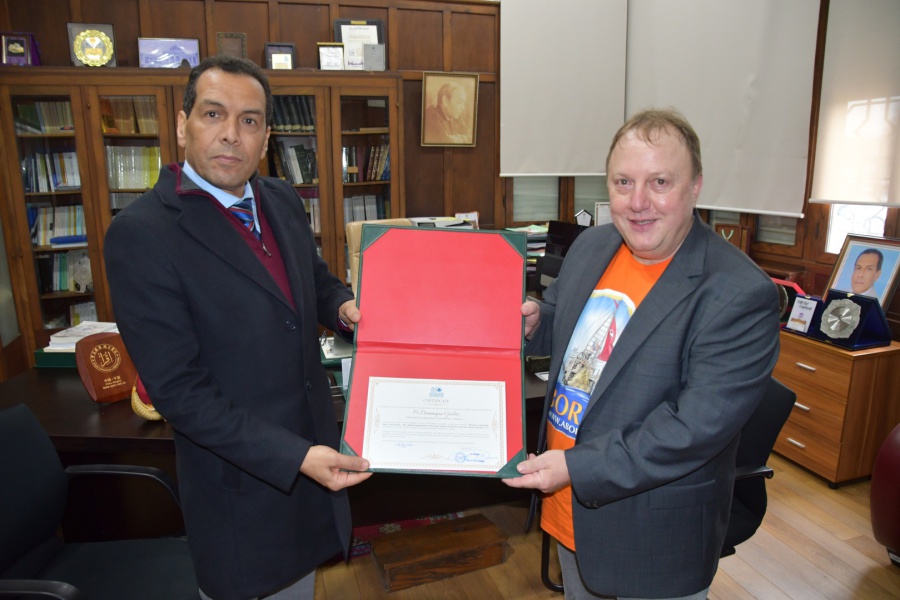
Bild 03
Der Dekan der Faculté des Lettres et des Sciences Humaines an der Mohammed V University von Rabat, Prof. Jamal Eddine El Hani. Er überreichte Dominique die Ehrenurkunde für die erfolgreiche Konferenz
an der Universität.
//
The Dean of the Faculty of Letters and Human Sciences at Mohammed V University in Rabat, Professor Jamal Eddine El Hani, presented Dominique with the certificate of honor for the successful
conference at the university.
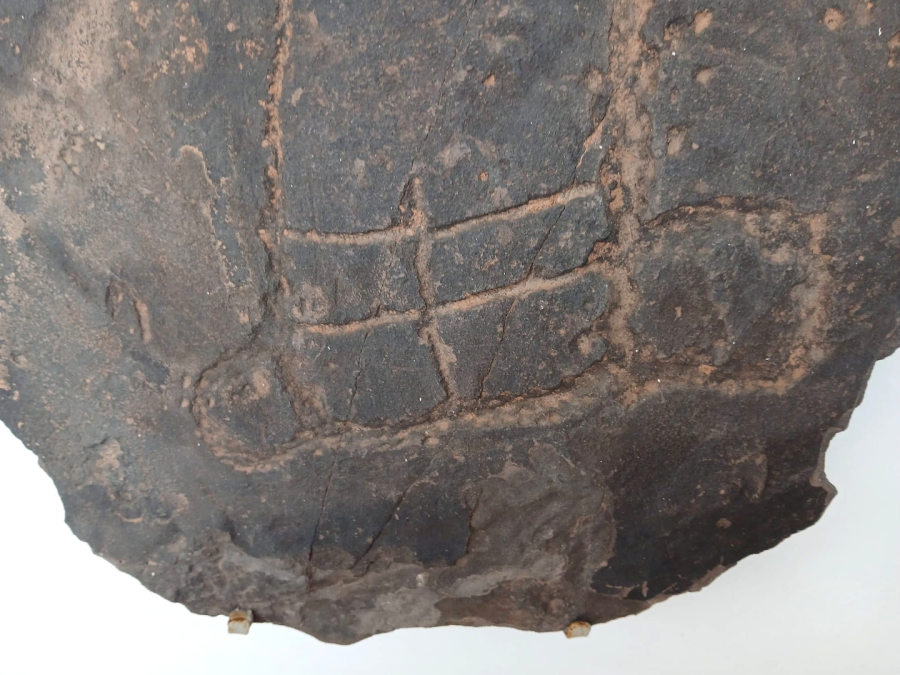
Bild 05
Schon am Vortag führte uns Prof. Oubihi in Museum für Geschichte in Rabat. Dort entdeckten wir gemeinsam viele felsbildliche Befunde, dass wir in Marokko am richtigen Platz sind, um die Lücken
zwischen den mediterranen und atlantischen Kulturen der Vorzeit zu schließen. Dieses bronzezeitliche Bild zeigt mit großer Wahrscheinlichkeit ein besegeltes Schilffloß mit einem rechteckigen Rahsegel
– eine typische Darstellungsweise dieser seegängigen Segelflöße.
//
The day before, Professor Oubihi took us to the Museum of History in Rabat. There, together we discovered numerous rock carvings, confirming that Morocco is the right place to bridge the gaps between
prehistoric Mediterranean and Atlantic cultures. This Bronze Age image most likely depicts a reed raft with a rectangular square sail – a typical representation of these seaworthy sailing rafts.
Neudatierung der Cheops-Pyramide auf 40.000 v. Chr.?
Eine neue Veröffentlichung von Alberto Donini (University of Bologna) sorgt derzeit für Aufmerksamkeit in der Debatte um das Alter der Cheops-Pyramide. Donini stellt darin eine innovative Methode vor – die sogenannte Relative Erosion Method (REM). Sie basiert auf dem Vergleich zweier Erosionsmuster desselben Gesteinstyps unter identischen Umweltbedingungen: eines mit bekanntem Alter, eines mit unbekanntem. Aus dem Verhältnis der Erosionsgrade wird anschließend eine Altersabschätzung abgeleitet.
Donini kommt zu dem Ergebnis, dass mit einer Wahrscheinlichkeit von 68,2 % die Bauzeit der Cheops-Pyramide zwischen 10.979 und 38.903 v. Chr. liegen könnte, mit einem Durchschnittswert um 24.941 v. Chr. Eine solche Datierung würde sämtliche bisherigen archäologischen und naturwissenschaftlichen Befunde grundlegend in Frage stellen.
Eine ausführliche Auseinandersetzung würde hier den Rahmen sprengen. Deshalb nur drei zentrale Fakten, die gegen eine derart frühe Datierung sprechen:
- Der Papyrus von Wadi al-Dscharf dokumentiert detailliert den Transport von Tura-Kalksteinblöcken zur Verkleidung der Pyramide und datiert eindeutig in die Regierungszeit von Cheops (um 2.600 v. Chr.). Die C14-Analysen bestätigen diese Einordnung.
- AMS-Datierungen von Holzkohlefunden aus dem Kalkmörtel der Ecksteine ergaben Wachstumsdaten zwischen 3.030 und 2.905 v. Chr. – in enger Übereinstimmung mit weiteren C14-Daten aus den Arbeiterquartieren hinter der Chefren-Pyramide.
- Astro-archäologische Untersuchungen von Robert Bauval zeigen, dass die Ausrichtungen der sogenannten „Seelenschächte“ nur im Zeitraum zwischen 2.700 und 2.500 v. Chr. präzise zu den relevanten Sternkonstellationen passen.
Ich bin gespannt, wie die Fachwelt auf Doninis Ansatz reagieren wird. Nach heutigem Kenntnisstand halte ich diese extreme Frühdatierung jedoch für nicht haltbar. Unabhängig davon bleibt die Frage
offen, ob einzelne Bauwerke auf dem Gizeh-Plateau – wie Taltempel und Sphinx – möglicherweise tatsächlich älter sind, als bislang angenommen, ein Aspekt, der weiterhin intensiv diskutiert werden
sollte.
++++++++++++++++++++++++++++++++++++++++++++++++++
Redating the Great Pyramid of Giza to 40,000 BC?
A new publication by Alberto Donini (University of Bologna) is currently generating considerable attention in the debate surrounding the age of the Great Pyramid of Giza. Donini presents an innovative method – the so-called Relative Erosion Method (REM). It is based on comparing two erosion patterns of the same rock type under identical environmental conditions: one of known age, one of unknown age. An age estimate is then derived from the ratio of the erosion degrees.
Donini concludes that there is a 68.2% probability that the construction period of the Great Pyramid could lie between 10,979 and 38,903 BC, with an average value around 24,941 BC. Such a dating would fundamentally call into question all previous archaeological and scientific findings.
A detailed discussion of this would go beyond the scope of this article. Therefore, here are just three key facts that argue against such an early dating:
- The Wadi al-Dscharf Papyrus meticulously documents the transport of Tura limestone blocks for the pyramid's casing and clearly dates it to the reign of Khufu (around 2.600 BC). Carbon-14 analyses confirm this dating.
- AMS dating of charcoal samples from the lime mortar of the cornerstones yielded growth dates between 3.030 and 2.905 BC – in close agreement with further carbon-14 data from the workers' quarters behind the Pyramid of Khafre.
- Astro-archaeological investigations by Robert Bauval show that the orientations of the so-called "soul shafts" only precisely align with the relevant star constellations during the period between 2.700 and 2.500 BC.
I am curious to see how the academic community will react to Donini's approach. Based on current knowledge, however, I consider this extremely early dating untenable. Regardless, the question remains open whether structures below the Giza Plateau – such as the Valley Temple and the Sphinx – might actually be older than previously assumed; this is an aspect that should be further discussed intensively.
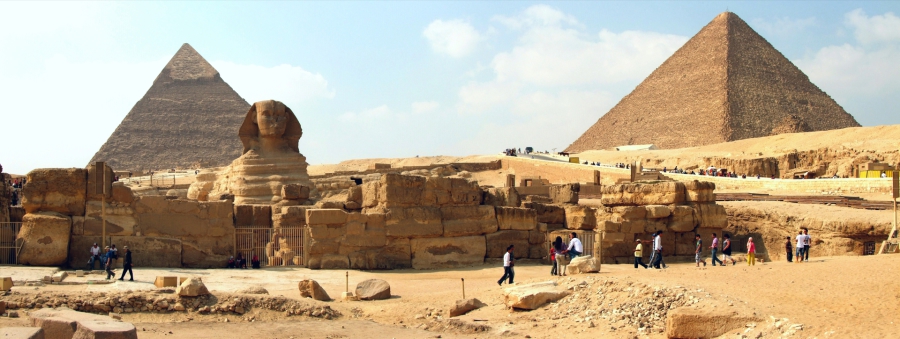
Bild 01
Über das Alter der Pyramiden auf dem Gizeh-Plateau diskutierten bereits die Gelehrten der Antike. Wenn man den Überlieferungen eines der bedeutendsten Gelehrten Herodot (um 500 v. Chr.) folgt, wurde
die größte Pyramide zuerst von Pharao Cheops (Khufu) in der 4. Dynastie vor 4.600 Jahren errichtet. Ob die megalithischen Großsteinbauten unterhalb der Großpyramiden gehen, ist jedoch noch
umstritten.
//
The age of the pyramids on the Giza Plateau was already debated by scholars of antiquity. According to the accounts of one of the most important scholars, Herodotus (around 500 BC), the largest
pyramid was first built by Pharaoh Khufu (Cheops) in the 4th Dynasty, some 4,600 years ago. However, whether the megalithic structures beneath the large pyramids are located there remains a matter of
debate.
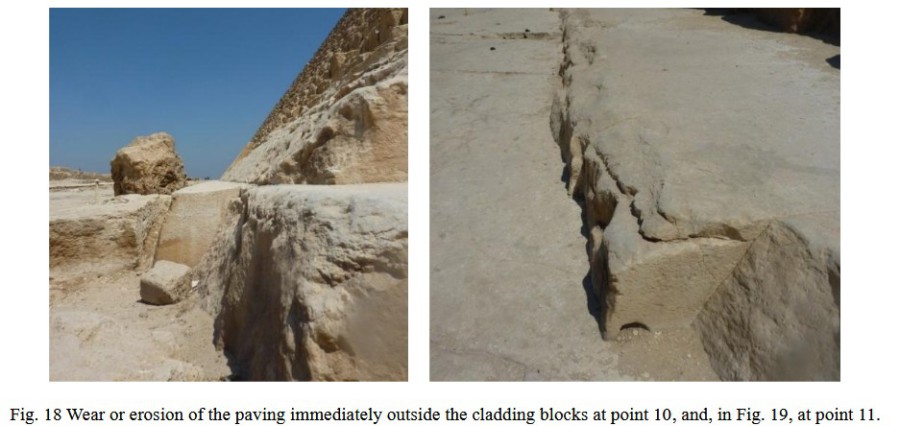
Bild 02
Auszug aus der Veröffentlichung von Alberto Donini (University of Bologna). Donini stellt darin eine innovative Methode vor – die sogenannte Relative Erosion Method (REM). Sie
basiert auf dem Vergleich zweier Erosionsmuster desselben Gesteinstyps unter identischen Umweltbedingungen eines mit bekanntem Alter, eines mit unbekanntem. Aus dem Verhältnis der Erosionsgrade will
er anschließend eine Altersabschätzung ableiten.
//
Excerpt from the publication by Alberto Donini (University of Bologna). In it, Donini presents an innovative method – the so-called Relative Erosion Method (REM). It is based on
comparing two erosion patterns of the same rock type under identical environmental conditions: one of known age, the other of unknown age. From the ratio of the erosion degrees, he then intends to
derive an age estimate.
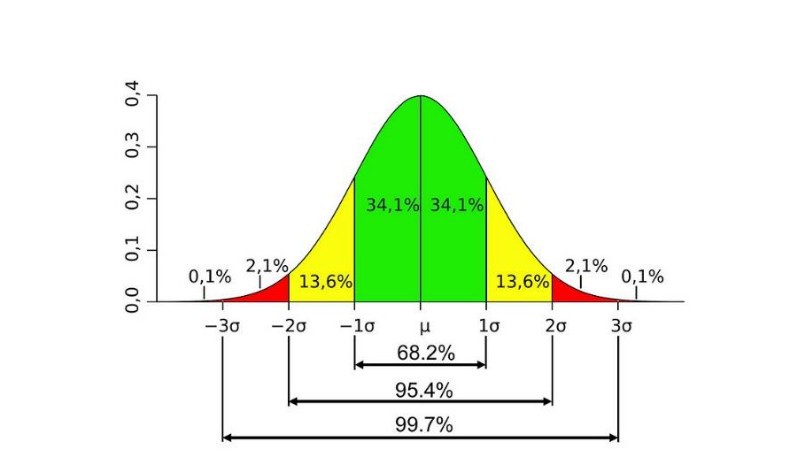
Bild 03
Mit Hilfe bestimmter Formeln berechnet er am Ende das ermittelte Alter der Verwitterungen. Die Gaußsche Kurve (aus Veröffentlichung), die die Wahrscheinlichkeit von 68,2 % zeigt, dass der Wert
innerhalb von plus oder minus einer Standardabweichung liegt.
//
Using specific formulas, he ultimately calculates the determined age of the weathering. The Gaussian curve (from the publication) shows the probability of 68.2% that the value lies within plus or
minus one standard deviation.
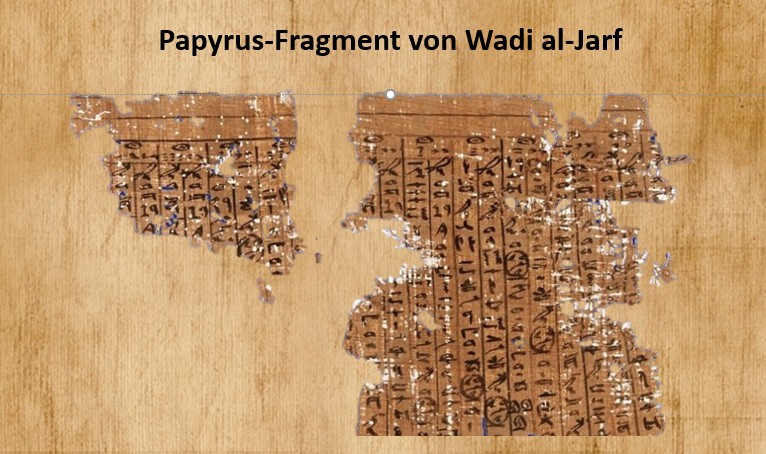
Bild 04
Fragment eines der ältesten beschrifteten Papyri Ägyptens – die rund 4.600 Jahre alten Fragmente vom Wadi al-Dscharf am Roten Meer. Die Texte dokumentieren die Arbeit eines Bautrupps, der Kalkstein
von Tura nach Gizeh schiffte. Das Steinmaterial diente zum Bau der Großen Pyramide von König Cheops. Beweist dieser Papyrus damit die Authentizität der Herodot-Überlieferungen?
//
Fragment of one of Egypt's oldest inscribed papyri – the approximately 4,600-year-old fragments from Wadi al-Dscharf on the Red Sea. The texts document the work of a construction crew that shipped
limestone from Tura to Giza. The stone was used to build the Great Pyramid of Khufu (Cheops). Does this papyrus thus prove the authenticity of Herodotus's accounts?
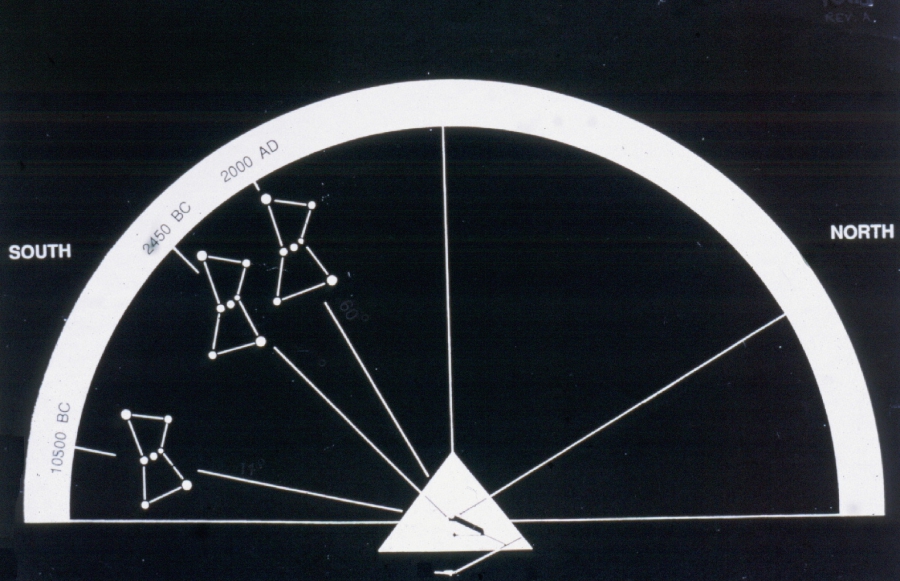
Bild 05
Die Berechnungen von Robert Bauval ergaben, dass die Präzision der Erdachse in Verbindung mit der Ausrichtung der so genannten "Seelenschächten" eine astronomische Datierung der Cheopspyramide
erlaubt. Nur in einem recht engen Zeitfenster zwischen 2.700 bis 2.500 v. Chr. weisen die Schächte auf ganze bestimmte Sterne bzw. Konstellationen.
//
Robert Bauval's calculations revealed that the precision of the Earth's axis, in conjunction with the alignment of the so-called "soul shafts," allows for the astronomical dating of the Great Pyramid
of Giza. Only within a relatively narrow time window between 2.700 and 2.500 BC do the shafts point to specific stars or constellations.
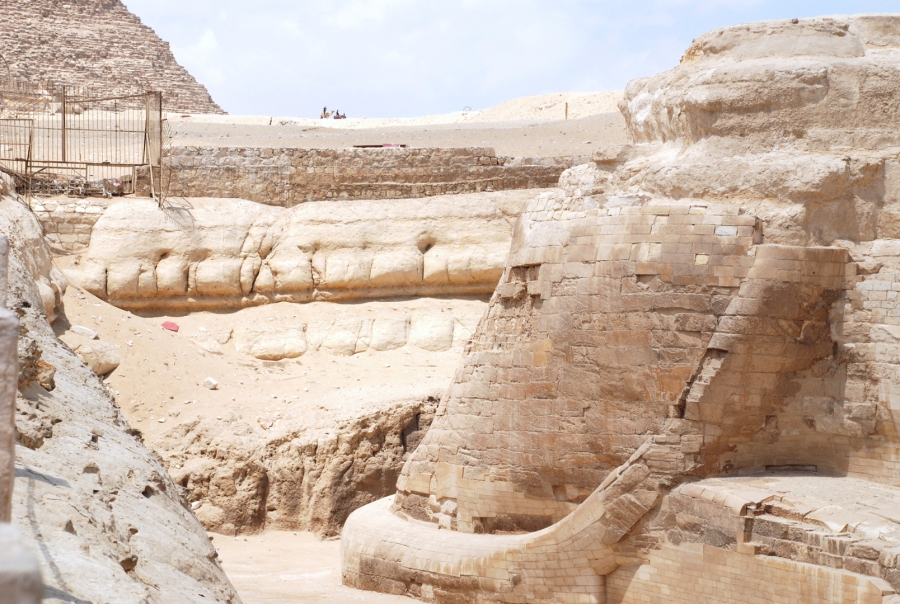
Bild 06
Angeregt durch den Autor John Anthony West machte Prof. Robert Schoch Anfang der 1990er Jahre durch Untersuchungen an der Sphinx bekannt, dass die Erosionsspuren eher auf starke Wassererosion als auf
reine Winderosion hindeuten könnten. Seine These: Die Verwitterung könnte auf eine deutlich feuchtere Klimaperiode zurückgehen — also auf ein Alter um 10.000 v. Chr. Mein Kollege Prof. David Rohl und
ich lehnen dieses Paläoalter aufgrund eigener Beobachtungen an prädynastischen Strukturen auf dem Gizeh-Plateau ab.
//
Inspired by the author John Anthony West, Professor Robert Schoch, through his research on the Sphinx in the early 1990s, revealed that the erosion patterns might indicate strong water erosion rather
than purely wind erosion. His hypothesis: The weathering could date back to a significantly wetter climatic period—around 10.000 BC. My colleague Prof. David Rohl and I reject this paleo-age based on
own observations on predynastic structure at the Giza-Plateau.
Der neue Internetauftritt des ABORA-Projekts
Schon am letzten Donnerstag, den 22. Januar 2026, stellten wir in Zusammenarbeit mit CM System GmbH Gotha sowie dem ABORA-Team das neue Internetportal www.abora.eu erstmals der Öffentlichkeit vor. Seitdem ist es freigeschaltet. An diesem Tag präsentierten das CMS-Team und Dominique den vollständig neu konzipierten Webauftritt des international bekannten Forschungs- und Expeditionsprojekts. Die Plattform bündelt erstmals mehr als drei Jahrzehnte Experimenteller Archäologie, maritimer Forschung und interdisziplinärer Wissenschaft in einer klaren, dokumentierten und frei zugänglichen Form.
Das neue Portal gibt einen umfassenden Einblick in die DILMUN- und ABORA-Expeditionen, das Cheops-Projekt, die aktuellen Forschungen, wie das Kanaren-, Teneriffa- und Kuba-Projekt sowie die Vorbereitung der kommenden ABORA V-Atlantikmission. Neben historischen Expeditionen stehen neue archäometrische Datierungen, experimentelle Großversuche und bislang unveröffentlichte Forschungsergebnisse im Fokus. ABORA.eu versteht sich damit nicht nur als Archiv, sondern als lebendige Forschungsplattform – und als Einladung, die Geschichte früher Seefahrt und globaler Kontakte neu zu denken.
Noch einmal der Link zur neuen Plattform: www.abora.eu
++++++++++++++++++++++++++++++++++++++++++++
The new website of the ABORA project
Last Thursday, January 22nd, 2026, we, in collaboration with CM System GmbH Gotha and the ABORA team, presented the new website www.abora.eu to the public for the first time. It has been live since then. On that day, the CMS team and Dominique presented the completely redesigned website of the internationally renowned research and expedition project. For the first time, the platform brings together more than three decades of experimental archaeology, maritime research, and interdisciplinary science in a clear, documented, and freely accessible format.
The new portal provides a comprehensive overview of the DILMUN and ABORA expeditions, the Cheops Project, current research projects such as the Canary Islands, Tenerife, and Cuba projects, and preparations for the upcoming ABORA V Atlantic mission. In addition to historical expeditions, the site focuses on new archaeometric dating methods, large-scale experiments, and previously unpublished research findings. ABORA.eu sees itself not only as an archive, but also as a vibrant research platform – and as an invitation to rethink the history of early seafaring and global contacts.
Here again is the link to the new platform: www.abora.eu
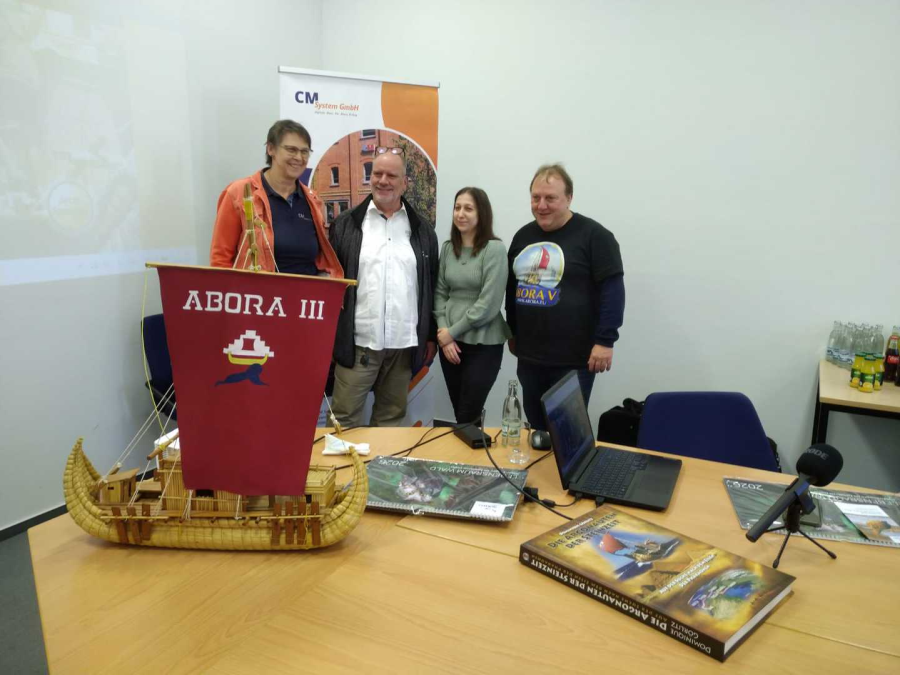
Bild 01
Das erste Hochladen der neuen Webseite fand in den Räumen von CM System GmbH Gotha statt. Von der operativen Leitung waren anwesend (v.l.n.r.): Dorit Temme (direkte Operatorin), Heiko Bley
(Geschäftsleitung), Julia Prokopidis (Internet-Design) und Dr. Dominique Görlitz (ABORA-Projekt).
//
The initial upload of the new website took place at the offices of CM System GmbH in Gotha. The following members of the operational management team were present (from left to right): Dorit Temme
(direct operator), Heiko Bley (managing director), Julia Prokopidis (web design), and Dr. Dominique Görlitz (ABORA project).
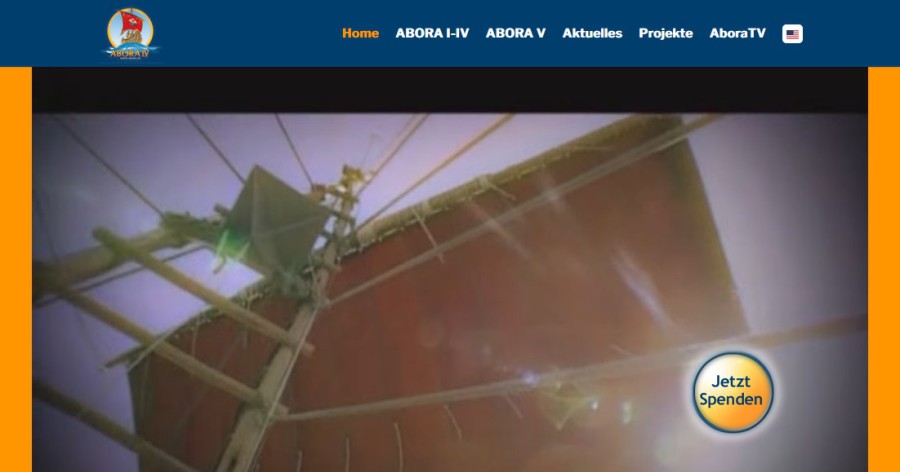
Bild 02
Blick auf die neue Startseite, auf der ein neues Info-Video über alle wichtigen ABORA-Missionen läuft. Oben in den Reitern sieht man die neuen Kategorien von ABORA I-IV bis ABORA V sowie „Aktuelles“
und weitere „Projekte“. Diese neuen Kategorien wurden sehr detailliert und reichbebildert erarbeitet. In den nächsten Wochen werden noch zahlreiche Videolinks eingebaut. Außerdem erfolgte eine
direkte Umschaltung auf ABORA TV – der Plattform von Nuoflix.de – auf der alle neuen Dokumentationen der Forschungen und neuartigen Projekt von Dominique Görlitz multi-medial präsentiert werden! Noch
Fragen? Bitte einfach mal aufsuchen und ausprobieren…
//
A look at the new homepage, which features a new informational video about all the important ABORA missions. The tabs at the top show the new categories: ABORA I-IV to ABORA V, as well as "News" and
other “Projects”. These new categories have been developed in great detail and are richly illustrated. Numerous video links will be added in the coming weeks. There's also a direct link to ABORA TV –
the Nuoflix.de platform – where all the new documentaries about Dominique Görlitz's research and innovative projects are presented in a multimedia format! Any questions? Just visit and explore…
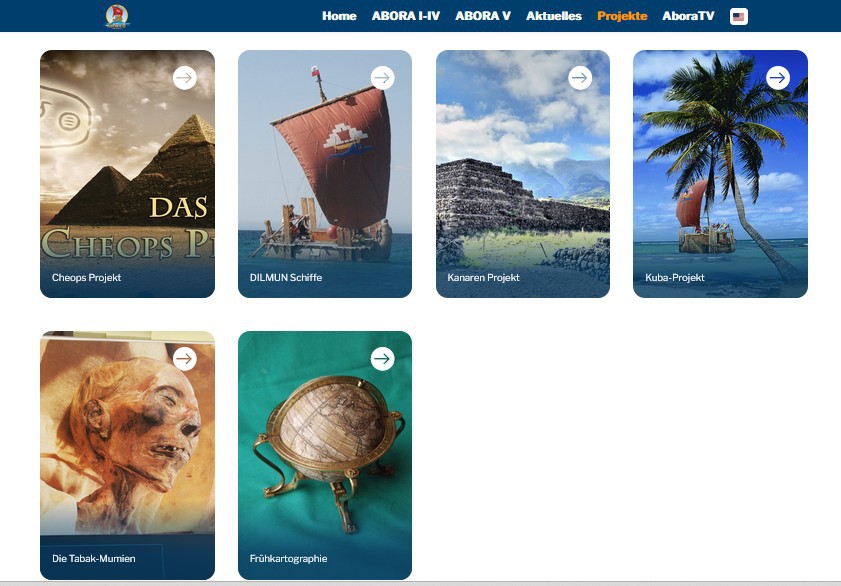
Bild 03
Exemplarisch wird hier einfach einmal der Reiter „Projekte“ aufgeschlagen. Diese Kategorie wurde erstmals völlig neu und aktualisiert erstellt. Im Weiteren geht es neben dem bekannten
„Cheops-Projekt“ in die trans-disziplinären Kanaren-Projekte, wo das ABORA-Team mit viel Geld und Aufwand die Ursprünge der kanarischen Urbevölkerung aufklärt. Es sind noch alle Forschungsprojekte
von Görlitz hier aufgelistet. Aber der Anfang ist gemacht. Auch eine englische Fassung wird in Kürze identisch folgen!
//
As an example, let's open the "Projects" tab. This category has been completely redesigned and updated for the first time. In addition to the well-known "Cheops Project," it includes the
transdisciplinary Canary Islands projects, where the ABORA team is investing considerable resources and effort to elucidate the origins of the Canary Islands' indigenous population. All of Görlitz's
research projects are currently listed here. But this is a start. An identical English version will follow shortly!
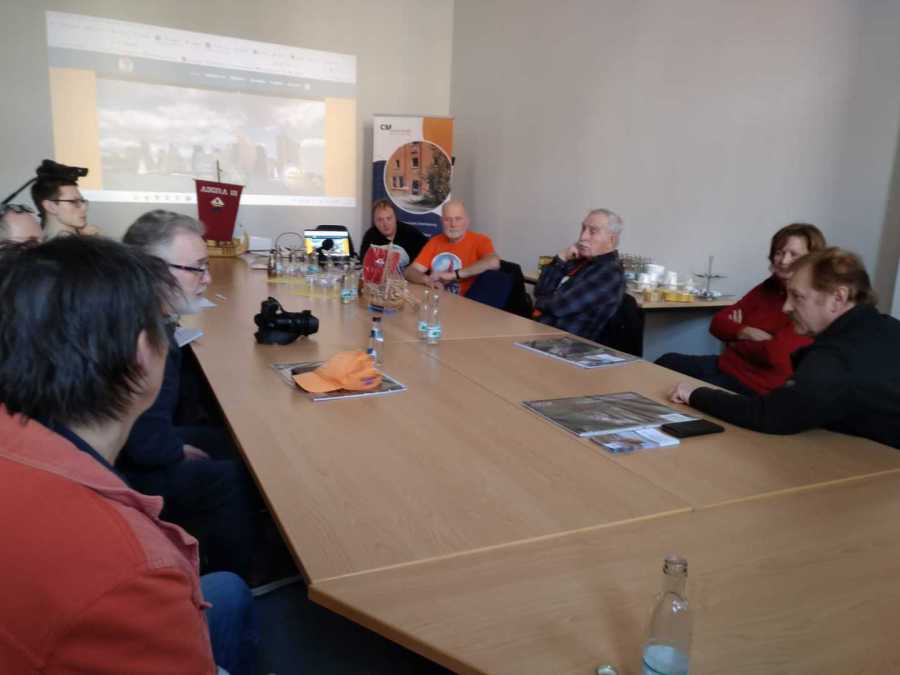
Bild 04
Etliche Partner des in Gotha entstandenen ABORA-Projekts sind zur Präsentation gekommen. Neben ABORA-Mitgliedern auch die Thüringische Allgemeine Gotha und Oskar TV. Schon seit Beginn mit von der
Partie auch der Leiter des NABU Thüringen Ronald Bellstedt, rechts im Bild.
//
Several partners of the ABORA Project, which originated in Gotha, attended the presentation. Besides ABORA members, representatives from the Gotha Thuringian Allgemeine (newspaper) and Oskar TV were
also present. Ronald Bellstedt, head of NABU Thuringia (pictured on the right), has been involved since the beginning.
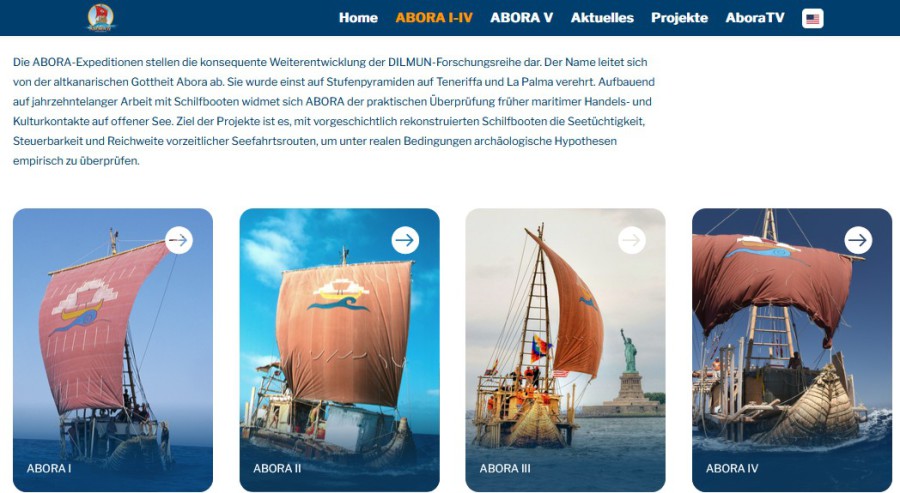
Bild 05
Noch einmal der Blick in den Reiter „ABORA I-IV“. Darin werden die wichtigsten Entwicklungen und Ergebnisse innerhalb der 26jährigen ABORA-Projekte aufgezeigt. Es würde zu weitführen, auf alle
Expeditionen einzugehen. Vielleicht die entschiedensten Projekte für die Archäologie waren ABORA II (2002) und ABORA III (2007).
//
Let's take another look at the "ABORA I-IV" section. This section outlines the most important developments and results within the 26 years of ABORA projects. It would be too extensive to discuss
every expedition. Perhaps the most significant projects for archaeology were ABORA II (2002) and ABORA III (2007).
Wollt Ihr mehr über unsere Arbeit hören oder auch sehen? Dann besucht uns doch auf YouTube! Das neueste findet Ihr hier!

Schaut doch mal hier:
Hier geht es ohne Umwege zum:
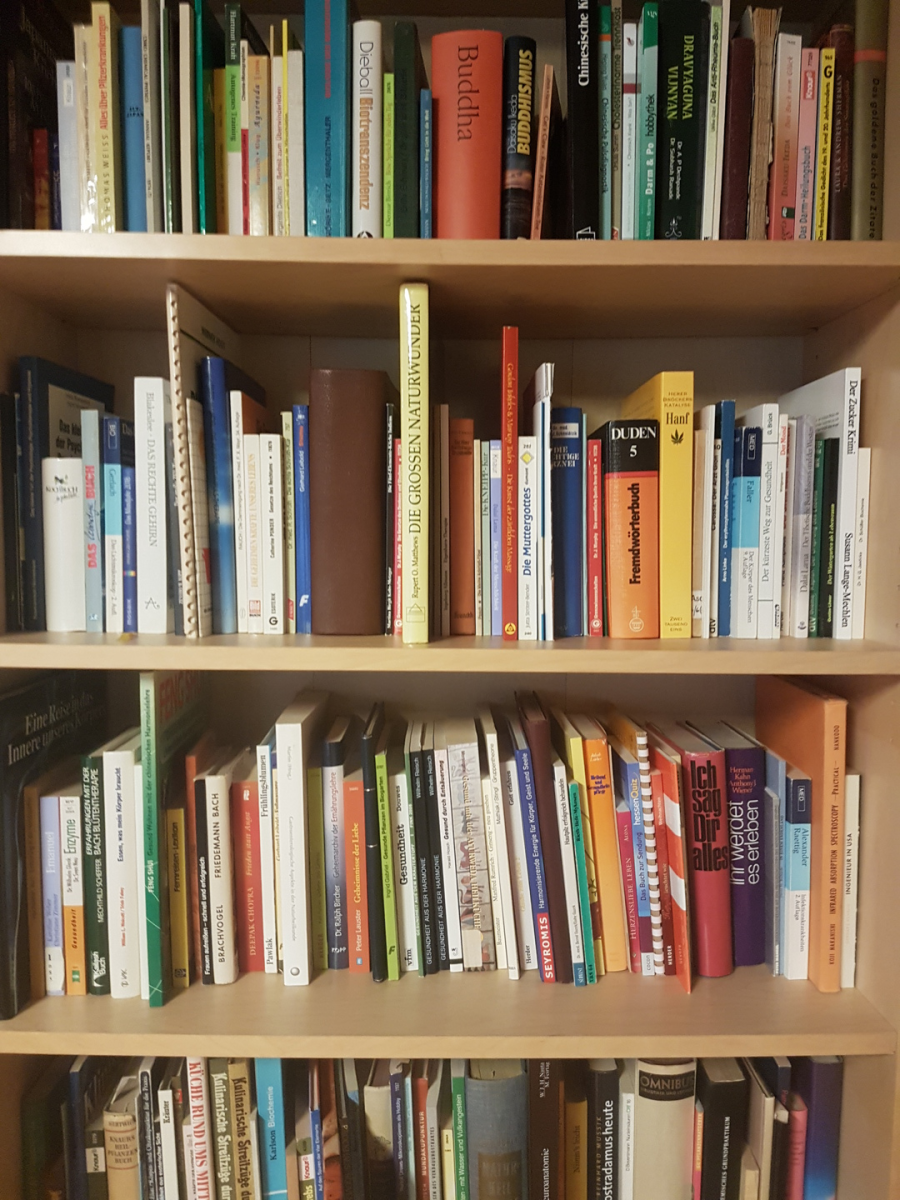
Jetzt alle Bücher aus dem Ancient Mail Verlag auch im Atlantis-Esoterik-Shop auf ebay versandkostenfrei erhältlich!
Abwicklung und Auslieferung durch die Internetbuchhandlung Distro274, Mario Pöhland
Heute schon in unseren
Schnäppchengestöbert ??
Wir legen großen Wert auf Datenschutz, Transparenz und auf Datensparsamkeit. Hiermit möchten wir Sie informieren, dass wir unsere Datenschutzerklärung aktualisiert haben. Die Aktualisierung erfolgte in Zusammenhang mit der am 25. Mai 2018 in Kraft tretenden EU-Datenschutz-Grundverordnung (DSGVO) und ist ab sofort gültig. Unter anderem haben wir Details über die Auskünfte, welche Daten wir erfassen und wie wir mit von uns gesammelten Informationen umgehen, ergänzt. Unsere gesamte aktualisierte Datenschutzerklärung können Sie hier lesen.
Kooperationen mit:


Neuerscheinungen



Hier finden Sie uns
Ancient Mail Verlag
Werner Betz
Europaring 57
D-64521 Groß-Gerau
Kontakt
Rufen Sie einfach an unter
00 49 (0) 61 52 / 5 43 75
oder schicken Sie ein Fax an
00 49 (0) 61 52 / 94 91 82
oder nutzen Sie unser Kontaktformular.
 Druckversion